
(PUBLISHED IN IRISH POLITICAL REVIEW FEBRUARY 2015)
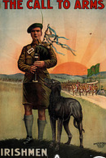
In a corner of a foreign field, the Embassy of the sovereign Irish State in Brussels recently hosted Gay Byrne and a film made by the Irish State Radio and Television station to blacken the name of the Irish insurgents of Easter 1916, to belittle the nation which endorsed the short-lived Republic of that week,and to misrepresent two generations in Ireland in its train.
Gay Byrne, who, by chairing RTE’s LATE LATE SHOW, has exercised more uninterrupted power than any other Irishman or woman in modern history.Neither the combined Benches of Catholic and Church of Ireland Bishops nor Fianna Fail and their rivals have exerted such continuous influence over Irish minds. He has and been highly paid for it,. Yet he bears a grudge against the nation he fattened on. He cherishes that grudge above all the other treasures of his Irish heritage.
It seems his father was a begrudger of truly heroic stature.He considered the 1916 Rising a mere skirmish, though it took nearly a week, many thousands of British troops with artillery and machine-guns and no qualms about using them on civilians, to persuade the insurgent leaders to surrender. No insurgent garrison had been overrun by the British. The insurgents had inflicted more casualties on the enemy than they sustained, and they still had the ammunition and the appetite to use it. Knowing that they most probably would be shot by the British if they surrendered, they had the discipline to do so when ordered, by their leaders, in order to save the lives of Dublin’s citizens.
In the House of Commons on 11 May 1916, hours before his firing squads shot to death the prisoners – Sean McDermott and the wounded James Connolly, -, Herbert Asquith, Britain’s Prime Minister, said the rebels had fought a fair fight.
It appears that, like many a better man, Gay Byrne’s father was serving with the British forces in France or Belgium at the time. Two of my mother’s brothers and the husbands of her two sisters also served in that war in the British forces and there probably were few families in Ireland without any members similarly involved. I could show you on Howth Summit and in the Dublin suburb of Killester “Soldiers’ Cottages” built for some of the survivors, Those survivors were not despised by their neighbours, nor were their children outcasts, nor were the cottages burned or damaged, as they surely would have been had the revisionist narrative of recent decades had any basis in fact.
I was born in 1941 in Dublin, about six years after Gay Byrne. About six weeks later my mother’s youngest brother was killed serving with the British Army in Singapore. (Another brother was wounded serving with the British Navy off Jutland in May 1916, and another was badly gasssed in Flanders in 1918.) The eldest brother had joined the Irish Christian Brothers before the Great War, the Order which taught both Gay Byrne and myself.
According to Gay Byrne’s narrative, Irish Great War veterans were hard done by, by their fellow-countrymen on their return and written out of history. That is an untruth, The Irish Army whose nucleus was the Insurgent force of Easter Week, paraded to “The Foggy Dew,” a march whose lyric had been changed to honour the insurgents of 1916 and to salute also their brothers who had joined the British Army in the belief that they were furthering the rights of small nations. For at least four decades Carty’s History of Ireland was a standard textbook in Irish schools and newspapers such as Fianna Fail’s Irish Press and Sinn Fein’s United Irishman carried stories of Irish heroism in the Great War.
Neither the Irish Free State nor its successor discriminated against Irishmen who had served in the Great War. But, following the Civil War, veterans from the losing side were not favoured during Cosgrave’s decade in control.
My father had a friend who had been on the losing side in the Irish Civil war and thought his life and his livelihood would be better preserved and enhanced by a spell across the ocean. He came back to Ireland in the 1930s after Cosgrave’s party had been swept from office, and took his California-born son out to Dublin’s Phoenix Park.
Then,
“Like stout Cortez, when with eagle eyes
He star’d at the Pacific – and all his men
Looked at each other with a wild surmise
Upon a peak in Darien”
the child beheld the 1,752 green acres, and asked –
“But, Dad, who waters it all?”
I’d surmise that Gay Byrne’s much put-upon Dad did, not with his blood, nor his sweat, nor his tears. For Gaybo tells us that he returned from a battle of Ypres or three, sound of wind and limb, to a guaranteed job for life with Arthur Guinness.
Like the braggart fantasist Cap’n Boyle – ” The Paycock” in O’Casey’s play – he voyaged on a barge from St James’s Gate to Custom House Quay, and back, and exulted in the lifting, and the lowering, of countless barrels of porter whereas my father’s friend had to endure prohibitionin California, which obviously suffered from drought.
Who do you think you are?
It is a fact that people were attacked by armed RUC men in the north of Ireland. All the people wanted was a vote, a house and a job. It is a fact that people were shot and killed by members of the British Army throughout the north of Ireland. People were burned out of their homes in the north of Ireland. Men, women and children were killed or maimed by lead, plastic and rubber bullets. People were interned without trial. Decisions made by military personnel and politicians led to collusion between the security (?) forces and loyalist killers. People were killed in Belturbet, Monaghan and Dublin. Millions of pounds have been spent in an attempt to hide the results of British military policy in Ireland. During the dark days, it is evident that some were content to live on the island of scams and dollars.
“Ach más éigean an cumann a chur i gcrích/Agraim thú a shearc na bhFiann,/Gan cenagal leo gan raidhse dollar.” Ó Direáin
“Let me beseech you, you darling of the Fianna,/To make no contract without wads of dollars.”
What did your Eagle Eye find wrong with my effort? What relevance do your true complaints have to the article? When you have nothing relevant to say it might be prudent to remember the saying “Is binn neal ina dtost.” If you put that in your pipe rather than what you’ve been
smoking I think it might be better. But I’m a layman, not a doctor.
sorry for typo “is binn beal ina dtost” I meant. Domhnall O Cinneide.
A chara, my question was addressed to a TV presenter. Apologies for not being more specific.
The first word which usually springs to the lips of all the G. Byrne idolators is the p-word: professionalism.
Which is odd, very.
As one understands it, the role of a TV or Radio chat-show host is akin to that of a referee, a sort of aloof noncombatant, whose modus operandi is that of a Ghandi who leaves his prejudices like his galoshes at the door on his way in to the studio.
Whatever the chat-show’s host may harbour in the way of bias ought to remain as much a secret to his audience as his inner-leg measurements or his blood-sugar levels. Of no relevance whatsoever to the job in hand.
Obviously, the temptation for a notice-box (and this is the cohort of society from which the chat-show host is overwhelmingly drawn) to promulgate his own pet likes and set revulsions must indeed be strong. But resist it he must.
That is why he gets paid ginormous amounts of dosh, bordering at times on the humungous. Judges get paid on the same basis, though of course on a much more modest level in keeping with the relative unimportance of the duty they discharge.
It was after all the destiny of Gay Mary Byrne to lead the primitive aw-shucks and awe-struck license payers of Paddyland to the sunlit sidewalks of Sophisticated Street.
And so, according to the criteria mentioned above, how did The Ultimate Professional (T.U. P.) measure up as a professional? Did TUP become the TIP TOP of his trade?
Did Gay Mary Byrne manage to become the Chat-show Cheshire Cat of Chanel 7 with an uncanny ability to fade into the background, allow his guest to engage the Late, Late viewer while the professional host became invisible?
He did in his whole grain bread. Far from being the Grin which flashed before fading,,it was his Cheshire Cat Grin, that embodied everything from smugness to vacuity to bigotry itself, which became the dominant fixture to hypnotise,erm, everyone in the audience.
In fact, the more professional (i.e, in the sense of the more moolah he made from the public purse) the more amateur he became as he was allowed to turn his LL Show on the box into his own private soap box. He always chose the easy, the amateurish option: instead of the poker face he invariably opted for the jaundiced eye.
From being The Hand which did not Shake (cf G. Adams) to calling, on live TV, almost twenty years later, M.McGuinness ‘a liar’.
And all because, as he hinted once with tears in his calculating eyes, his own shell-shocked Daddy, (a veteran of the Great Donkey Derby 14-18′ ) ‘used to (sob) wake up roaring in the middle of the night’ in their modest terrace house in Rialto.
Fascinating to read, therefore, how he is still urinating all over the Back-stabbers of Easter Week (at taxpayers’ expense) in the ornate and recherche surrounds of the Embassy of the Free Southern Stateen in Brussels. A city whose emblematic image is, not inappropriately, that of the Manneken Pis perennially pointing Percy at the passing pedestrians.
To conclude with another reference to the pinnacle of his professional career (cf G. Adams above). That was the legendary occasion he recreated the Stonebreakers’ Yard in the RTE Studio, with a panel of dispassionate guests on hand to do a Castlereagh on the Chief Suspect.
Alas, the Hand that did not Shake was to become, a few short years later, The Hand that could not Stop Shaking.
This happened when, after Russell Murphy, accountant and the most trusted moneybags of Gay Mary Byrne had passed over and over whose grave The Ultimate Professional had delivered a moving and tearful eulogy, it transpired. A few short days later, that the deceased had squirrelled his trusting friend’s life savings away and put them to his own extravagant use.
Leaving Uncle Gaybo with an empty pocket, a broken bank account and a shaking hand. The aftershocks of this traumatic tale did not end there: Hugh Leonard, the dramatist, who had willingly played the part of one of stalwart squad in the mock up Stonebreakers’ Yard , fell hook, l. and sinker for the same fiddle.
Dramatic Irony?
Ni sampla go dti e.
Perkin -when I started writing to papers i wrote in imitation of the style of Bernard Levin in THE TIMES.
I got nowhere. Desmond Greaves told me that Swift would read his drafts to his cook and
if she couldn’t follow them would go back and write them in plain English.####
Perhaps the best written paper, for its purpose, is THE DAILY MAIL. Lord Salisbury said it
was written by office boys for office boys. In fact it is written, cleverly but in a simple style
by blackguards to fool decent people. Why do you think the British haven’t risen up and
hanged the Tories from Lamp-posts? It’s because they’ve been spoon-fed on nonsense.
Compulsory schooling from 1870 created the first generation which could read and the
DAILY MAIL and its imitators ensured that as the franchise was widened it would voluntarily
defer to its “betters.” I think Perkin Warbeck came to a sticky end?
Must disagree, Donal. Let a thousand flowers bloom…
PS.
Mention of Manneken Pis brings statutes to mind.
One wonders if a space could be found to erect one to the redoubtable Russell Murphy, who truly contributed to the gaiety of the nation?
Though, perhaps, a bust might be more appropriate under the circumstances, Suitably situated outside the Gaiety Theatre.
This is the venue where the Caped Crusader (the opera cape being the fashionable garb of choice for this flamboyant fiddler) was in the habit of purchasing a whole front row of seats in the Grand Circle overlooking the stage, on every opening night of a Hugh Leonard Play.
(Somehow he also overlooked informing the dramatist that the tickets had been purchased with the moolah which had been entrusted to his charge for investment purposes).
Finally, surprise was expressed when Gay M. Byrne was appointed Chairman of the Road Safety Authority after his ascension into retirement heaven (partial)..This surprise was a surprise in itself.
For this Collector of Honorary Doctorates was truly a man of letters (D. Litt x 7) and this appointment involved but a change of letter: from T to R.
For nigh on 40 years he was Chairman of the Toad Safety Authority. Not for nothing was he affectionately known as Toad of Toady Hall (aka The Postrate, Postrate Show) as he toadied to every liveried nonentity who pigeon-toed in from the hallowed halls of minor royalty to every loud-mouth who elbowed his gelded way in from the shallows of a la mode.
Not only was he a toady himself but Gay Mary Byrne was the cause of toadyism in others. Hardly had he bade his last weepy farewell on his final night when – hey presto !- there was Bonzo himself wheeling in a shiny new (gasp) Harley Davidson for the H-angel of Howth Head !
This was the donation which clinched the Road Safety gig. Sadly, the pushy donor was not so lucky with a different kind of bike, the push kind. When he had a tumble in Central Park.
Luckily for the future of mankind his unctuous neck of tungsten made escaped damage.
I mentioned the Donor in passing in a piece, the first in a series PSEUDS, CORNER BOYS
in THE IRISH POLITICAL REVIEW. Its subject was that RAGGED-SCHOOL PHILANTHROPIST
Bob Geldof
I a m approaching my 70th year, and unfortunately, all that goes with it. What amazes me is that only in the last year or so have I become acquainted with the writings of Perkin Warbeck and Donal Kennedy. Where had they been hiding the previous half century? Two wonderful, very astute, very different and very perceptive political commentators. And above all very entertaining.. Go maire siad an céad!
Dúirt tú é, Brian!