
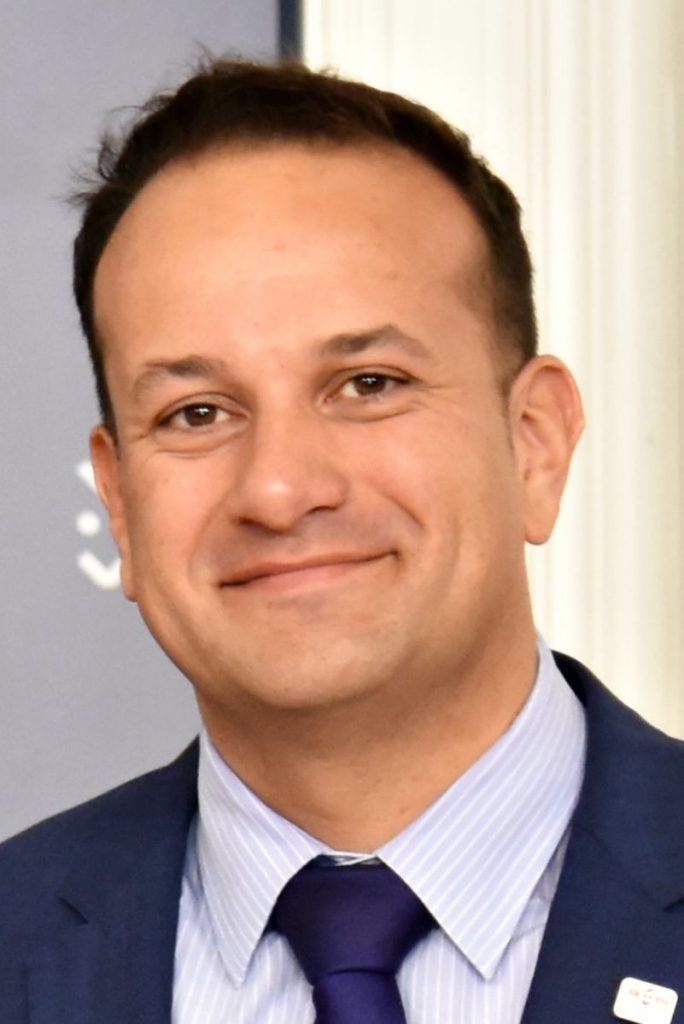
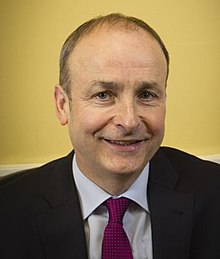
Much has been made (and is being made) of the ways in which Sinn Féin is not a ‘normal’ political party.
Top of the list is the Troubles. Republicans were involved in that conflict, chiefly in the form of the IRA. Micheál Martin is on record as saying that Sinn Féin have not shown ‘contrition’ for the past violence of the IRA. Micheál hasn’t been exact on what form this contrition might take, but presumably it’d be something along the lines of Ian Paisley’s short-lived demands for ‘sack-cloth and ashes.’
Clearly an apology or regret for past violence wouldn’t do: Gerry Adams and Martin McGuinness and other Sinn Féin figures have on several occasions expressed regret for the violence and sympathy with those who were victims of that violence. They haven’t, as far as I know, gone as far as to say they regret that republicans were involved in violence; in fact Martin McGuinness repeatedly said he was very proud of his role in the IRA. But were they to do that, it would be to accept the unionist painting of the Troubles as a sudden mass outbreak of murder in the republican population which went on for thirty years and finally saw the error of its ways. Few serious historians would accept that as a serious depiction of what happened.
The other reason for giving Sinn Féin a wide berth is the ‘shadowy figures’ argument. This claims that the Sinn Féin party doesn’t decide things for itself but is controlled by a shadowy IRA group who tell it what to do.
No one, including the PSNI, claims that these ‘shadowy figures’ are violent, or certainly not violent any more. Which would make them what all parties in Ireland called on the IRA to be: people committed to a peaceful and political path to attain their objectives.
Most parties have unelected advisers. Dominic Cummings, a key shaper of Tory policy, was unelected. Alastair Campbell, Tony Blair’s constant support, was unelected. The man who many hail as being the father of modern Ireland’s move out of poverty, T K Whitaker, was unelected. Smart parties make use of people who can help them shape their policies and attain their goals. I’d be astonished if Sinn Féin were so foolish as not to have such ‘shadowy figures’.
A final reason given for crying “Unclean! Unclean!” at the mention of Sinn Féin is that their policies are so different from those of Fianna Fail and Fine Gael, there’s no point in talking. And yet Fianna Fail once went into coalition with the Progressive Democrats, a group formed because it saw the Fianna Fail party as lacking in integrity and politically corrupt. And didn’t Fine Gael form a coalition with the Labour Party, whose manifesto was a long, long way from that of Fine Gael.
If you read today’s Irish Times, you’ll see three articles attacking Sinn Féin, emphasizing its lack of normalcy: there’s an editorial, there’s an article by Pat Leahy and another one by Stephen Collins . That’s certainly one way in which Sinn Féin is not a normal party: no other party receives the constant barrage of accusation and condemnation from the mainstream media.
Ultimately, all of this comes down to Sinn Féin’s links with a violent past. When the predecessors of Fine Gael and Fine Fail entered the First Dail a hundred years ago, many of the representatives were carrying weapons. In Leo Varadkar’s office today, there is a huge painting of a military figure: it is Michael Collins in his army uniform.
Enough with the excuses, Leo and Micheál. Senior hurling requires focus on today’s game, not yesterday’s or the one a hundred years ago.
Comments are closed.