
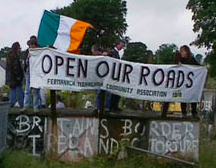
The Secretary of State has further asserted his claim that the interests of the North, and by inference, the South of Ireland will be protected throughout all negotiations on the UK exit from the EU. But what exactly does he mean by interests? And how will they be protected?
Recently I spoke with John MacMahon, a highly respected accountant and Board member of Newry & Mourne Enterprise Agency about this very same issue. Being from one of the most commerce-led areas of the North and regularly providing expert advice to businesses North & South, he’s probably one of the best-informed people to ask on the island about the economics of it all; And, fundamentally, the importance of the Single Market to ensure tariff free trade and similar tax arrangements. Similar discussions with other experienced entrepreneurs and small-to-medium businesses have each outlined a number of identical key concerns regarding their analysis for any future arrangements;
- We need continued access to the Single Market so that we can allow for the free flow of goods and services between the North & South of the island. Any barriers or taxes placed on this trade would be hugely detrimental to the tax-payers of both the North and the South, for it is the creativity and potential of enterprising people which creates both jobs and taxable revenue for the public purse. Hospitals, schools and roads don’t build or finance themselves!
- There needs to be continued free movement of people between the North, the South and the rest of the U.K. This existed before British or Irish entry to the EEC in the 1970s, so the two lands and populations have been economically and socially integrating for quite some time. It is not within the UK Government’s interests to do anything which would undermine this, especially when so many badly needed skilled professionals from Ireland happen to work in the UK.
- We must continue to hold visa-free status when travelling to other European countries. Who would seriously want to go back to requesting permission to enjoy some of the most popular resorts in Spain, Portugal and France?
- That the financial and supply-side support given to businesses in the North will be guaranteed by the UK Government. Whether this will remain in place after a British exit is uncertain at present but again, why would the UK Government rescind these measures when to do so would precipitate a deep recession?
- People want to know whether access to the Single Market will mean continued compliance with all the rules and regulations of it, like with the Norway model (most likely option).
- Perhaps the most important of all questions is whether the arrangement which unveils is going to be good or bad for the entire business life cycle of trade on this island in the long-term? For one thing, the unknown has delayed many pertinent decisions at a micro and macro level in the commercial-sphere.
Whatever happens, we have to make a success out of this, to not do so would mean a decade of lost economic growth and opportunities. It is an “unknown known” to many that it would hurt European business more than UK business if any obstacles were placed in their way when selling products to the UK market. Germany sells more to the UK than the UK does to them, and continually, Mrs. Merkel exercises all the ace cards in Brussels.
Additionally, it also remains unknown to many people that the decision to leave means the locks can be taken off of public spending (now that the Maastricht Treaty’s fiscal restraints will no longer apply to the deficit) – hopefully turning on the tap of badly needed equity flowing throughout the economy. The May Government has notably made signals recently that it now wishes to return to Keynesian style spending to boost trade. This is a positive piece of news for the private sector because any investment in infrastructure and the public sphere will mean state employees will have additional monies to spend on goods and services delivered by business in the private realm of the economy. A pay rise for the public sector inevitably leads to more invoices being issued by the private sector.
But the worst possible arrangement, the nightmare scenario, would undoubtedly be an end to accessing the Single Market tariff free; restrictions on the movement of people between both regions of Ireland and the U.K.; and business being scuppered in generating the wealth required to pay for healthcare, education, infrastructure and the support which we all currently enjoy. For every child to have a school place here or a hospital bed to be available to those who are ill, it requires the tax receipts of enterprise and labour. That’s a fact! Both complement one another. And if everyone wants to have the security of a high standard hospital, a doctor’s appointment, a growing job market and opportunities for their children’s futures; then they need to lobby their representatives around the pertinence of this issue. Securing these assurances and insurances will be the deal which defines much of all our destinies, and failure simply isn’t an option.
Comments are closed.