
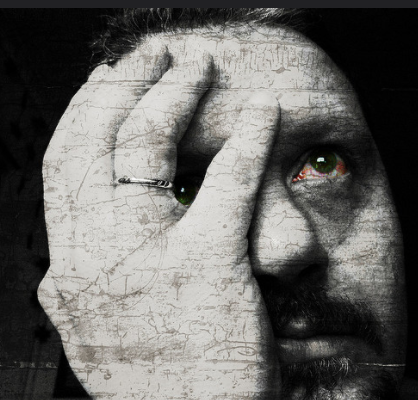
We all know someone who has or have personally experienced the suffering that accompanies mental illness. I remember at school you would see people who always wore the cuffs of their jumper down to hide the signs of evident self-harm – it was heartbreaking to encounter. I’m a bit on the creative side of things, which tends to couple with highs and lows in general mood. There are days when I seriously don’t want to get out of bed and face the world, despite having a promising career and everything going reasonably well for me. I’m always foreboding over the future and at times it gets so bad that I wish to never wake up again. I’m not ashamed in the slightest to admit that I suffer from a mix of depression and anxiety, for I know that it is far more common than 25% of the population – virtually everyone feels depressed at some point in their lives.
When I’m in this state, I feel highly strung and don’t want to much interact with anyone. I tend to withdraw into myself or retreat into the pages of a book. Distracting yourself from your thoughts is a good self-help technique. I’m also a workaholic, it keeps me from sitting ruminating all day over the problems of this world. I often like to recall the resilience of a great, great grandmother who was made a widow very young and had to raise all of her children in an era when no welfare state really existed – seeking to avoid tears in front of the children and working her whole life to ensure purpose. Those women, who lost husbands in the World Wars and not only ran a household but also a country, are the greatest role models we have for inner strength. Unlike many, I do have a family to support and listen to me when things get bad and that’s the point of this article – how to help those who don’t.
The waiting lists for people to see a Psychiatrist or to obtain psychotherapy, so as to alleviate their mental distress, remain shockingly long. Many have committed suicide in the process of awaiting notice of a diagnostic appointment. Most working people cannot afford to pay for private care. Mental health, we are told, is the “Cinderella” of the NHS budget. But does it have to be this way?
It’s an established fact that our National Insurance contributions go towards funding the NHS for everyone; even if we don’t use it we have the security of knowing it is always there should we require it, and what a beautiful reality that is. The most left-wing institution within our society is also the most popular. Is there something we can learn from this? Isn’t this inevitable given our ageing population’s needs?
Well, I think national insurance as a form of taxation really ought to be partially devolved to the Assembly. What I mean is that the UK Government could continue to set the universal basic rate, which would apply to everyone, but the devolved administrations could fluctuate that rate upwards to a level which would pay for a National Care Service.
By that, I mean a service which operates just like the NHS, albeit not as big, but incorporating the social care and mental health sectors within it. It means everyone paying a small amount extra each week, with higher earners paying a bit more, to fund an expanded mental health and nursing care department. It would grant us the funding for long term planning of additional training of Clinical Psychologists, Psychiatrists and Mental Health Nurses, as well as increased recruitment of Care Workers.
I never bought into the “care in the community” hype espoused by Thatcher. I recognised it was just a way of discharging people from costly hospital beds and throwing them out of 24 hour care to fend for themselves, with occasional check-ups by a Health Visitor. I’m not in favour of institutionalising people either, but I believe any right thinking person would agree more mental health beds are essential in a civilised society. We also must utilise technology as a means of addressing the discontent of many, for science has no moral basis except that which the human mind decides upon in applying it.
This isn’t an unrealistic idea, the Scottish Government has the power to vary the rate of Income Tax by a set percentage more, to garner increased revenue for public services (not that they use it!). If we are going to address the real legacy issue of the conflict here – trauma and suicide – then we need strategic state planning on the allocation of resources to an area which impacts us all. The German Government introduced a slight increase in their equivalent of National Insurance to pay for the legacy of partition and reunification following the collapse of the Berlin Wall. People are still paying it in Germany, and those feeling stressed have the right to a stay in a luxury wellbeing spa, with on-site therapy, available on prescription.
If all the different community and mental health groups were to congregate, mobilise and demand this off of the Stormont Executive, they would get it within a year – which party could actually be seen to oppose it? This is an issue which impacts every community in the North, and until they speak with once voice on the matter we will continue to read of ever higher suicide figures. Realising this would be a genuine legacy to leave to future generations amidst the aftermath of conflict.
Comments are closed.