
The first piece, a letter written by myself, headed “Local Pride and Plastic Bullets” was printed in London’s “Enfield Advertiser” a weekly give-away paper on 9 December 1982 and is given in full.
.
The second piece quotes an article written by Alberic Stacpoole, OSB, MC “Ex-soldier, monk priest and Oxford tutor” an Opinion piece printed in THE SUNDAY TIMES on
21 June1981 which was headed “What The Army Is Doing in Ulster ” with the subtitle ‘The meaning of minimal force’. It is accompanied by a photograph of happy, smiling children, hugging a smiling soldier, bare-headed and apparently unarmed. The photo has the caption “Belfast, May 1981:’soldiers task is to bring stability’. ” The nub of Father Stacpoole’s ,account is “soldiers do not deliberately kill in Ulster:any death by their hands is either self-generated by a terrorist;or an accident in a tough climate ; or, (rarely) a private murder, taken to court.”
My letter –
LOCAL PRIDE AND PLASTIC BULLETS
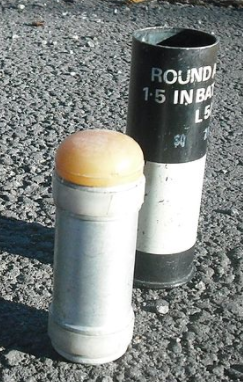
“A local paper (not the Advertiser) recently celebrated on its front page the local development and manufacture of a weapon which can fire plastic bullets, gas grenades or a combination of the two.This means says the paper, ‘that an officer faced with a hostile crowd would no longer have only a single shot, as at present.’ Two days later the Home Secretary denied that any police force in England or Wales had been issued with this fire-arm and stated that guidelines issued by him did not authorise its use. THE GUARDIAN which reported Mr Whitelaw’s restraint (13/11/82) reported also the visit by Princess Anne to a Beirut refugee camp on behalf of ‘Save the Children.’
Twelve-year old Carol Anne Kelly was carrying a carton of milk home from her corner-shop when five armoured Landrovers careered into her street, the occupants of the first two firingtheir single-shot plastic-bullet guns at the few children nearby. One of these bullets hit her on the head and she died three days later. She was not engaged in terrorism.
Ten days earlier (12 May 1981) 14-year old Julie Livingstone was on her way home at 6 pm when struck on the temple by a plastic bullet fired from a speeding armoured car. She was not engaged in terrorism.
Ten-years old Stephen Geddis was struck on the head by a plastic bullet in August 1975 and died three days later. The Royal Anglian Regiment had chased a group of children,
the eldest of whom was 13, to fire at them after being stoned. Stephen Geddis had not thrown stones, nor was he a wanted terrorist.
Eleven-year old Steven McConomy died after soldiers in an armoured car blew in the back of his head on April 16 this year in Derry. He was 16 months old when other soldiers
killed 13 unarmed people near the same spot. He was no terrorist, and had his hands in his pockets, when struck by that fatal cowards’ blow. When bystanders asked soldiers
could they go to his aid. they too were threatened with shooting.
Brian Steward, aged 13, Paul Whitters, 15, Nora McCabe aged 30, Michael Donnelly, aged 21, Peter Doherty aged 33, Peter McGuinness, aged 40, Henry Duffy, aged 45, have died from plastic bullets.
Hundreds of other children and women have been badly injured – some losing the sight of both eyes. One child, paralysed down his side, crawls now like a crab. Pregnant womenhave been wilfully shot in the stomach.
According to the Northern Ireland Office all these deaths and injuries were consistent with regulations limiting the Security Forces to the minimum employment of force. In none of
these cases cited does this defence withstand examination. Plastic bullets replaced rubber bullets which had proven unsatisfactory – only killing three persons.
Enfield’s new wonder-product should increase the kill rate.
Incidentally, that should please the government. All those killed by these weapons were Irish Catholics – a notoriously fecund species, who if not culled more efficiently, may yet elect more non-Unionist representatives in John Bull’s Other Island.
Perhaps a triumphant parade will be staged in Enfield when the 100th Irish child is killed by a plastic bullet?
Donal Kennedy”
9th December 1982.
FROM “WHAT THE ARMY IS DOING IN ULSTER” (THE SUNDAY TIMES 21 JUNE 1981) by ALBERIC STACPOOLE, OSB. MC.
Paragraphs 1-4
“ARGUABLY Britain is now involved in her last colonial ‘war,’ except that it is happening in the United Kingdom, and is termed ‘aid to the civil power.’
Soldiers’ hands are tied, so that they may not even threaten use of the ultimate sanction, but must resort to plastic bullets, tear gas and compressed water; while they confront rockets, rifles, automatic weapons, bombs, acid, incendiaries and mines such as can toss a Saracen armoured vehicle high into the air, slaughtering its whole crew.
A soldier may properly operate in another society’s country only if his presence brings more peace and more justice than would his absence; that is his avowed task, not the opposite, as some misguidedly suppose.
The Cardinal of Westminster and Mr Atkins agreed on June 5 that ‘it is the government’s responsibility to continue to provide and keep under review a humanitarian regime in Northern Ireland.’ This is why British soldiers were ordered into Ulster in August 1969, essentially to protect Catholics, though now by some irony the Catholics have become their shrillest enemies.”
Father Stacpoole’s piece goes on to list statistics of those killed during the years 1969 to 1976 but does not tell us how General Frank Kitson’s repetition of dirty tricks practised in Malaya, Kenya and Oman worked out in Ireland, the British Army’s sponsorship of the Ulster Defence Association and direction of Loyalist Paramilitaries, its plainclothes army assassins posing as Loyalists in drive-by murders of Catholic civilians to provoke sectarian tit-for-tat killings, its use of torture to get information and the continued lying of organs
of and sympathisers with the British State.
Stacpoole’s 9th paragraph recognises that his statistics,” lacking flesh and blood, all trip lightly from the pen. It is more striking to provide real examples from human experience. May I now provide three, all from my own ken. One shows the ordinary military situation we have come to expect:an officer and his men facing their duty. One shows the double process of winning the hearts and minds of Irishmen, and winning intelligence from them for the sake of law and order. One shows that will which all soldiers have, to put their own lives at risk to save others; for they are the peacemakers.”
He goes on in paragraph 10.
“First let me speak of my younger brother’s second of three Ulster tours. Captain Michael Stacpoole, a company commander in the Duke of Wellington’s Regiment, found himself in the notorious Crossmaglen sector, a southern border area of 25 miles in length by 3-4 miles in depth, some 100 miles square (sic) covered by at most, 100 soldiers.”
Paragraph 13 etc have the following gems
“Now let me speak of someone I helped to educate at Ampleforth College, who kept his hawk (used in the film ‘Kes’) at the hall from where I now write, Captain Bobby Nairac GC of the Grenadier Guards – a true bridge-builder. He joined his Regiment in Ulster, returning with them for a second
tour………………………..So he was called to undertake a second tour of ‘police liaison duties’ in that soft area between hardened IRA and frightened Irishmen, between the desperate and the underprivileged………….Meanwhile he found his way
to the Crossmaglen pubs……….With tact he built bridges often introducing local inhabitants after hours to the newly arrived regimental commanders …… he struck up friendships which allowed him to collect information in a climate of co-operation, although he was a known Army officer.”
Father Stacpoole OSB was no naive greenhorn. He had won the Military Cross in Korea near the Chinese border when the Chinese. threatened with invasion by Britain and her allies sent troops into Korea to stop them. Stacpoole organised barbed wire and other defences upon which hundreds of Chinese died. He fought against EOKA Guerillas/ Freedom
Fighters in a war described by the British as an Emergency. In 1956 when Britain, France and Israel launched a squalid attack on Egypt. Stacpoole parachuted into Port Said with the aggressors as an adjutant for a unit of the Parachute Regiment.
Stacpoole writes of the horrors visited on the his brother’s company of the Duke of Wellington in the “notorious” Crossmaglen sector, where the local people, defending their own turf, accomplished deeds such as had won him the MC many thousands of miles away from his own native turf.
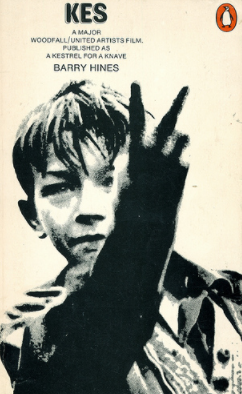
He refers to Bobbie Nairac’s pet hawk, which featured in Ken Loach’s film “Kes.” That film is based on the story “A Kestrel for a Knave.”
It’s hard not to suspect that the Benedictine College at Ampleforth, with its nexus of Cardinal Basil Hume, Father Stacpoole OSB, MC, his brother Captain Stacpoole, and the “Bridge-Building” Bobbie Nairac, was a nest of S.O.B.s and Knaves.
TO BE CONTINUED
Comments are closed.