
This review first appeared in The Andersonstown News
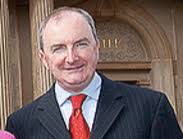
IRELAND, CANCER AND ME (RTÉ ONE) starts with Tommy Gorman standing on the balcony in Bedford Street, making his last report as RTÉ’s Northern correspondent. “When I think of the Northern Ireland I came to first in 1980, it’s a better place now. The killing has stopped and the likes of Arlene Foster and Michelle O’Neill, and all the other parties in the Assembly and south of the border – they are committed to making things work.” Then the news anchor in Dublin thanks Tommie for his many ears of work, and the broadcast is over. “Wow” Tommie says, and you can see he’s near tears.
Twenty years ago, Tommie made a documentary called “Europe, cancer and me”. Now he’d like to update the story: “We’re going to give it a working title: IRELAND, CANCER AND ME. (RTÉ ONE)
He was in his fifth year as RTÉ’s Brussels correspondent, thirty-seven years old, when he was first diagnosed with a rare form of cancer.
Through a series of coincidences, he visited some medical people in the Swedish city of Upsala. He was put on a drug, Interferon – “Heavy artillery” Tommie calls it. We see the doctor in Upsala telling Tommie that they can’t get rid of his disease – just manage it, keep it under control. “If we can keep the liver where it is or improve on it, you’re not going to die from this for a long time” the Swedish doctor reassures him. “How long?” Tommie wants to know. “Twenty, thirty years” the doctor says, but adds “No one really knows the answer’.
Tommie’s operation took out the lymph node affected and a small piece of his bowel. “But you have plenty of the bowel left” the doctor tells Tommie, as he lies in a bed recovering from the operation. “With the therapy we can control the disease.”
But it’s a therapy not available in Ireland; Tommie and a number of Irish doctors work together to set up an equivalent treatment in Ireland.
At which point Tommie “walked the walk”, as he puts it, and moved his treatment from Upsala to Ireland.
We’re shown how many Irish people now are treated outside Ireland for their illness, including a busload from Kerry headed for Belfast and hip-replacements.
Tommie learns to accept that there’s no cure for his cancer, but that the treatment can be kept at bay: “The dogs are asleep, they’re behaving themselves” Tommie says.
His courage in the face of this awful illness is impressive, as are his successful efforts to have his treatment made available in Ireland. But while the logistics of health treatment spanning borders is informative, we don’t get much insight into the personal terrors which his diagnosis must have unleashed on Tommie’s life.
So an interesting exploration of how different states make new treatments possible. Tommie Gorman emerges as a man of real courage, yet the programme never let us see how hard-won that courage must have been.
Comments are closed.