
I recently made a brief mention of Nursery Rhyme characters in relation to the naming of play parks for children. Given the hullabaloo over a park being given the nomenclature of a republican hunger striker , I made comparisons to the fact that many divisive “heroes” have been eulogised in a variety of ways , in the past. Streets have been named after famous British battles. Pubs have long-carried the names of British kings, queens , admirals and lords. In fact, one such- named , local public house was targetted in a bomb -run some forty- plus years ago; the building having survived intact , as a coaching -house, since the times of Jonathan Swift, was eradicated in a moment . I always felt that the particular second was something of a demarcation line between the old and the new and not in a completely good way either. .At that unheralded, unconscious moment a place of refreshment and a meeting-place of the two mixed teenage tribes was eradicated.It was a place where two unspoken schools of thought had mixed easily, prior to that explosion. Things would never be the same again for an entire generation.We’d somehow forgotten , for a short while , that there were things that divided us. That is not even to mention the barbarism of destroying the things that actually joined us together; those hundreds of years of local , human ,social history , eradicated and the re-birthing of the world at some unholy Year Zero. Public houses became “us and them ” zones essentially, thereafter.A generation grew up in social separation.
Statues have been erected in public places in memory of politicians. Instead I suggested naming such childrens’ parks after Nursery Rhyme characters. They would be wholly unaware of the fetid histories involved in the adult world , after all.
I wonder , though…
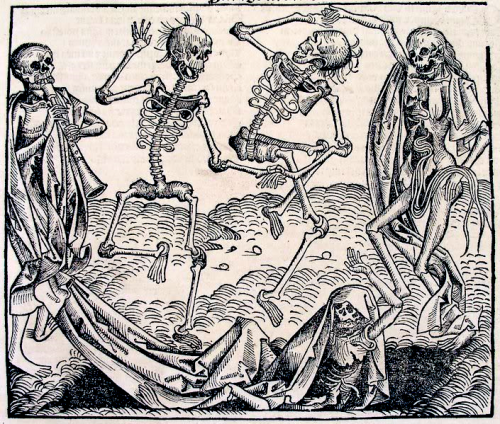
When you actually dig into the origin stories of these ancient rhymes, there is much horror and history to unearth too. The childish singsongs of yore have mostly their basis in real -life cruelty, savagery and political power plays. We have a tendency to forget what a ruthless creature we really are and what extremes of cruelty we can touch in the pursuit of our desires. In the lives of historical kings and queens , fear of their cruelties kept them in a job.Many of the older rhymes have been essentially censored or made politically correct for modern sensibilities, but their origins are mired in religion and politics.
Goosey Goosey Gander where shall I wander,
Upstairs, downstairs and in my lady’s chamber
There I met an old man who wouldn’t say his prayers,
I took him by the left leg and threw him down the stairs.
Take the old rhyme “GOOSEY GOOSEY GANDER”. As far as I can understand it has a provenance stretching back to the 1780’s . it was inspired by the religious persecution of Catholic priests , when Latin prayers were frowned upon and positively banned in public or in private. In the original there is a line about an old man who wouldn’t say his prayers,….” so I took him by the left leg and threw him down the stairs.” There’s nothing like banning a religious practice to turn it into a clandestine secrecy. You had better not get caught at it though.
Jack and Jill went up the hill to fetch a pail of water
Jack fell down and broke his crown
And Jill came tumbling after.
Up got Jack, and home did trot
As fast as he could caper
He went to bed and bound his head
With vinegar and brown paper.
Even the seemingly innocuous “JACK AND JILL” may not be too clean- cut and many puerile schoolboys and schoolgirls have already bowlerdised the lines to their own mucky , rhyming delight in much the way “Popeye the Sailor Man “was lewdly customised..Strangely enough it seems that the little verses were originally about King Charles I’s foiled attempt to reform the tax on liquid measures. The Parliament of the day rejected his suggestion, but the volume was eventually reduced on half- and quarter-pints. It was all about taxes and money . These half and quarter measures were known in their day as “jacks and gills” . The names are no longer really used or even heard of, but i can still remember reference to “gills” in my early schooldays.
Mary Mary quite contrary,
How does your garden grow?
With silver bells and cockle shells
And pretty maids all in a row.
Then there’s “MARY, MARY QUITE CONTRARY”.It wasn’t really about gardening at all apparently. Nobody cared how her garden grew at all .The Mary in question apparently alludes to Queen Mary the First of England. She was known as “Bloody Mary” and she was a staunch adherent to Catholicism. She reigned between 1553 to 1558 and her tenure was marked by the execution of hundreds of Protestants who didn’t share her views.. Apparently , far from being a reference to gardening at all , the “silver bells and cockle shells” were not in any way gardening decorations, but were in fact, devices used in torture-play.They really liked a bit of torture in the good old days as a necessary amuse bouche for the main event…the execution.
Three blind mice, three blind mice,
See how they run, see how they run,
They all ran after the farmer’s wife,
Who cut off their tails with a carving knife,
Did you ever see such a thing in your life,
As three blind mice?
Everyone knows THREE BLIND MICE ,or do they? Mary is supposedly involved in this one too and the “mice” that children are chanting about were supposedly three Protestant bishops who fell foul of Mary’s theological ire.They were Hugh Latimer, Nicholas Radley, and The Archbishop of Canterbury, Thomas Cranmer—who attemped to overthrow their queen . They didn’t have much luck though and were burned at the stake for their heresies. It has been suggested that the “blindness” was a theological one but it’s as likely that their eyes had also been put out before death. They really enjoyed employing that old hot-poker back then.
Ring around the rosy
A pocketful of posies
“Atishoo! Atishoo!”
We all fall down
We used to sing RING AROUND THE ROSIES and we’d end it with “Atishoo…atishoo …we all fall down ” The reality was very different .The original words go right back to London’s Great Plague of 1665 in which about fifteen per cent of the population perished. The original ending was “Ashes…ashes, we all fall down “ and of course referred to death by burning. The “rosie” was a very direct reference to the pox and facial roseation of the afflicted plague carriers skin …and the “pocket full of posies” was the floral bouquet carried in the pockets like a pomander , in an attempt to disguise the horrible stench of decay . This was used in much the same way as incense is still ceremonially shaken at funerals .It was originally used to disguise the stink of rotting flesh.
I suppose the “Broad Black Brimmer” , the “Fields of Athenry” or “The Sash My Father Wore” will make about as much sense to children in another five hundred years time . I hope that is the case . These may well be the Nursery Rhymes of the twent- fifth century . Children will not care what they are about or if they make sense or not, anyway, I’d imagine.
Fascinating piece, many thanks. Mind you, I doubt whether the lines in that old number Billy Boys about being `up to our knees in Fenian blood` actually refer to a lovely little garden in fairy tale land.That`s the problem with sectarian bigots nowadays, no subtlety.
What I really should have alluded to were the the children’s street songs like ….
My aunt Jane has a bell on the door
a white stone step and a clean swept floor
Candy apples, hard green pears
conversation lozenges
My Aunt Jane, she’s awful smart
She bakes wee rings in apple tarts
And when Hallowe’en come round
Fornenst that tart I’m always found…..
and then wonder what people 500 hundred years down the line would make of any of it..
Aye right enough dont mention the famine.
What about the famine , Michael? are there any skipping songs about it ?
Excellent piece Harry and I fully get your point.
However the pernicity pedant in me has to point out that it is an urban myth that “Ring around the Rosie” was about the plague. See what you have started even in a hypothetical debate we still can’t agree.
An urban myth , Tyrone Poet, like the albino alligators in the sewers of New York ?. That is very interesting but where is the origin story of that one if not from the plague? I find it very interesting how these stories develop.This stuff makes you think.
Paddykool I suggest that you read http://blogs.loc.gov/folklife/2014/07/ring-around-the-rosie-metafolklore-rhyme-and-reason/ which gives a full explanation for the non-plauge origins of the children’s rhyme.
As with all debate and discussion it is important to be able to be challenged and to be able to support your original statements with researched facts, otherwise where would we be? MLAs in Stormont or working for the BBC or RTE current affairs?
That is excellent Tyrone Poet, but it only goes to show how the “Chinese Whispers” of folk down through the ages becomes their reality ..and you and I are currently part of that process. That’s the thing ..Which historical version of these “truths” will be universally believed in five hundred years time? History and fable are being tweaked by each generation…revised and re-thought…re-drawn and re-written in different times and cultures..I do believe that people are capable of believing virtually anything that suits their agenda. I will revise my thinking of this “Rosie” , but it still makes a perfect sense in the context, doesn’t it?
The fields of Athenry remembers the famine .
Sorry Michael…I meant children,s songs…but I get your drift.It’s weird though how these folk ballads of misfortune and blues
can be turned into sporting songs…isn’t it?