
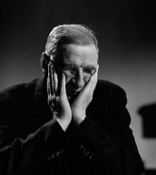
I ask the question because, in the unconvincing guise of a book review in the London Edition of THE SUNDAY TIMES (1 Nov) Mr Sandbrook depicts Eamon de Valera as a twisted political
dwarf. Mr Sandbrook is 41 years old.
Before his 39th birthday Eamon de Valera had been elected President of Sinn Fein and had led the party to victory in two General Elections. He subsequently founded Fianna Fail which the electorate returned to power under his leadership eight times.Following his retirement as head of government the Irish electorate chose him as Head of State, electing him to two consecutive seven year terms. Following his leaving the Cabinet, Fianna Fail remained the dominant force in Irish democratic politics for another 51 years. That’s the Irish context.
Dominic Sandbrook is a graduate of the ancient University of Oxford and is an Old Boy of Balliol College which boasts many very distinguished Old Boys. Including Edward Heath, who led his party to one General Election Victory, and others who never had that distinction. Roy Jenkins founded the SDP. Denis Healey was not a unifying force in the Labour Party,
probably because of his cleverness and his impatience with those whose opinions he did not share. Jenkins did become Chancellor of Oxford University. Eamon de Valera became
Chancellor of the National University of Ireland at 38 years of age and relinquished the posst when he expired aged 93.
On the International stage “Dev” was elected President of the Council of Ministers of the League of Nations in 1932 and in his first speech urged the nations to be faithful to the League’s
Covenant, which would oblige them to challenge Japan’s seizure of Manchuria. None of the other nations’ governments had the bottle.
Three years later when Italy under Mussolini invaded Abyssinia, “Dev” who had been elected President of the League’s General Assembly, urged the nations to combine in Abyssinia’s
defence and, in a broadcast on Radio Eireann, said that he would commit the Irish Army to that defence if the League honoured its Covenant. Mussolini’s rape of Abyssinia was approved
of by Pope Pius XI, Winston Churchill, and Fine Gael. Britain’s Anthony Eden described “Dev” as a firebrand. Britain could easily have thwarted Mussolini’s aggression by refusing passage to Italian ships through the Suez Canal, a waterway dear to Eden’s heart.
When General Franco led a mutiny against the lawfully elected Spanish Government he had the support of the Catholic Hierarchies of Spain and of Ireland, the Irish Independent and the
Fine Gael party. But he had neither the support nor the approval of Eamon de Valera, Fianna Fail or other Republicans. When the traitor dictator Franco was safely buried, the Spanish
Hierarchy apologised for supporting him, but the Irish Hierarchy and Fine Gael seem to have forgotten their complicity with the old blackguard.
Franco had been posted to the Canary Islands by the Republican Goverment les he do the State a Disservice. So a British Intelligence Officer, Hugh Pollard, flew to the Canaries, picked
up Franco and flew him to Moocco, whence he led Moslem troops on his “Christian Crusade” in Spain.
Hugh Pollard had form. He had played other games in Ireland as a leader of a dishonest, scurrilous, inept and discredited campaign against democracy.
Which reminds me of my Question – IS DOMINIC SANDBROOK A GREAT MAN?
No.
He is not even a good historian. See my blog https://weneedtotalkaboutdominic.wordpress.com/.
Matthew Cooper
Sounds very much like a British establishment man!
I think Dominic Sandbrook is not very interested in the Celtic Fringe even of the UK. In his massive tome ‘White Heat: Britain 1964-1970’, he went into minute and sometimes tedious detail about England’s World Cup victory over West Germany, giving us a second by second account of the emotions it aroused.
He also gives us a detailed insight into the debut of Twiggy who was dubbed ‘the face of ’66.’ I was once the best friend of the eldest daughter of Twiggy’s Svengali like manager and boyfriend. I am quite happy to tolerate reminiscences about Twiggy. At least I’ve become used to it.
But I also live 17 miles from Aberfan, and I wonder why in all his navel gazing on the social history that made 1966 memorable, Dominic Sandbrook did not mention the disaster once. It did not make it into the index.
I did enjoy the book. I was just baffled. In fairness, Sandbrook did devote a few chapters to the beginning of the Troubles in Northern Ireland. He was critical of Bernardette Devlin for provoking Protestants by leading Catholic marches through their streets.