
What irredeemably naff characters are Enda Kenny and Charlie Flanagan! When their compatriots and fellow members of the Oireachtas, who like them were invited by the President of the United States to a White House reception in honour of Ireland’s Patron Saint, were singled out for disrespectful treatment by American security officials, instead of showing solidarity with their compatriots they attacked them.
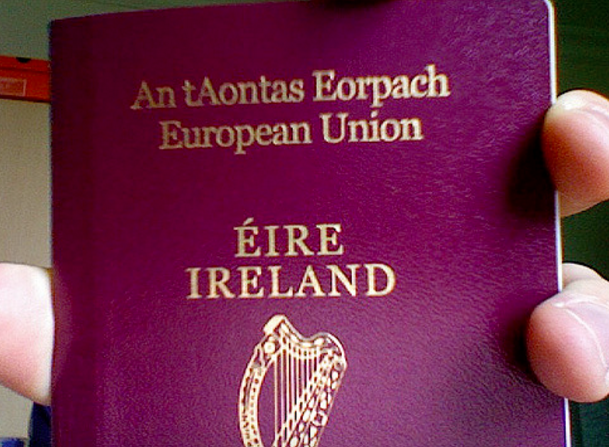
Irish Passports have a message from the Minister for Foreigm Affairs (politely) requesting that their holders be given more considerate treatment when abroad. British Passports invoke the Shadow of The Gunboat “requesting and requiring” decent treatment.
Charlie Flanagan should never have been Foreign Minister as he is unfit for that office.
I wonder who explained to Kenny and Flanagan who Rosa Parks was: I wouldn’t be surprised if they thought her a candidate for Rosa Tralee. And I bet if you said Rosa Luxembourg they’d reckon she was a disc jockey. Whereas Gerry Adams made a point of meeting with Rosa Parks on one of his earliest visits to the United States.
It seems that citizens of Ireland are reclaiming their history and rejecting the contemptuous and contemptible claptrap of RTE, the Tripe and Treason of the Irish Times, the fabrications of Seumas Murphy SJ and the Church of Ireland Archbishop of Dublin Michael Jackson and the unspeakable scoundrels in the Irish Independent.
I’ve been watching YOU TUBE reconstructions of the Battles of Mount Street Bridge and North King Street, by Dublin citizens who have researched them and don’t feel they need to have them explained to them by Michael Portillo, or Charles Townshend, Kevin Myers or cranky emeritus professors, ex-stickies with seats in the House of Lords or such galleries of rogues and grotesques. Local history groups seem to be proliferating and exploring the stories of their localities and families in all their amazing complexity, and standing taller from the experience.
Maxwell’s mandate
Today it was the turn of the great grand son of General John Maxwell to discuss the legacy of the man in Ireland. As if we did not know, the man had “put down” other rebellions far from these shores. He had the “authority” and “justification” to “put down” a rebellion in Ireland. He was described as a catalyst, an accurate description given that a catalyst does not change but produces a reaction. Maxwell, with overwhelming military might, only thought he was bringing stability to Ireland. There was no discussion about fighting for the freedom of small nations.
Today we learn of yet another turf war killing, as elected representatives squabble about expenses and the employment of relatives in the north of Ireland. In Dublin, media outlets note the leader of Fianna Fáil “skulking in the wings” waiting to destabilize a minority government. Perhaps some homeless people will recall the advice of a former Fianna Fáil minister on RTÉ in January 1999. Commenting on the costs of maintaining his three homes, he challenged his audience, “to try it.”