
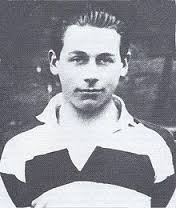
November 1, All Saints’ Day, marks the anniversary of the execution in Dublin’s Mountjoy Gaol of the Social Republican youth, Kevin Barry.
See https://m.youtube.com/watch?v=
In his excellent 1965 pamphlet, “The Story of Kevin Barry”, the late Sean Cronin brought to light an essay which the 17-year-old secondary schoolboy Kevin Barry had written in 1919 on the subject matter of “Prejudice”, which he considered from three angles – racial, religious and personal. Barry held that racial prejudice was the worst of all:
“It usually masks a much worse thing – oppression or tyranny. It is also divided into two classes, namely that of the white man against his coloured brother, for brother he is whether black, red, or yellow, and that of the white man against his fellow-white man of a different nation. The two combined form the origin of very many of the world’s greatest wars and slaughters.”
In another school essay on “Kingship”, Barry described it as “the only surviving evil of the days when the people, the mob, were looked upon as dirt; as animals to serve the mighty king and his minions. When all believed or were forced to believe in the Divine Right of Kings.” Writing in the wake of the the December 1918 General Election and the ratification by the First Dáil Éireann in January 1919 of the Irish Republic proclaimed by the 1916 Rising, Barry continued:
“We are at present living in a time which marks the wane of this despotism. In a day when the people are coming into their own. When the labourer – the backbone of every nation – has the same vote and the same right to live as those noblemen who in former times had almost absolute power… The belief in the Divine Right of Kings is dying out and the thrones of Europe are tottering. Sentiments which would have shocked our king-worshipping forefathers are floating about in the air. Liberté, égalité, fraternité, the motto of the second greatest Republic in the world will shortly become the war-cry of all and we hope our little island will not change her present views upon Kingship.”
Kevin Barry’s 1919 essay on “Industrial Unrest” illustrated how leftwing the world view of this internationalist Social Republican schoolboy had become:
“We are today passing through a crisis which is unparalleled in the history of the world. It is the culmination of four years of starvation, privation and misgovernment – it is the nemesis which awaited war profiteers, place hunters and grasping capitalists. It is probably the beginning of the end of aristocracy.”
“It is interesting to us to study this huge upheaval, its causes, its effects and its possible remedies. It is interesting also because it marks the triumph of Labour, of Trade Unionism and – as Martin Murphy’s (‘Irish Independent’) rag has it – of Syndicalism. When one contemplates the immensity of the trouble – the fact that in Belfast alone 95,000 workers are out on strike – the fact that the whole city is paralysed and the whole country could be paralysed at an hour’s notice, one is amazed at the stupendousness of this system and one can understand the elation of Labour.”
“The causes of a strike are not hard to discover. In nine cases out of ten it will be found that the cause is hunger. This itself may arise from two causes, bad wages or misgovernment. In former times it was the former. This crisis is the result of the latter… There is no remedy for a strike except to accede to the demands of the strikers. This may seem strange but it is sound common-sense as a brief examination of former strikes will prove. If the strikers are beaten they go back to work sullen and revengeful and it is short until they are ‘out’ again. But the usual procedure is the election of an arbitrator who effects a compromise.”
“We here in Dublin had an experience (in 1913) of a strike which has been looked upon by all the world as the ‘model strike’. When W. M. Murphy refused to recognise the tramwaymen as a union they went out on strike bringing out every trade union man in Dublin with them. The Socialists all over the world backed them and the food-ship ‘Hare’ was dispatched with food for the strikers, also money poured in from everywhere to keep up the strike. The men held out doggedly till they won or virtually won, since the tramway union was recognised. Thus we received a forcible demonstration of the power of an agitator in the person of that marvellous leader James Larkin and his able lieutenant, Commandant James Connolly.”
This essay, of course, suffered from an excess of schoolboy optimism, and a rose-tinted view of 1913. “Dublin is isolated” had been the cry of Connolly during that Lockout, describing the outcome, when Murphy’s employees returned to work without union recognition, as, at best, “a drawn battle”. ITGWU membership slumped from 30,000 in 1913 to 5,000 in 1916. The ITGWU that Barry beheld in 1919 had achieved a post-Larkin and post-Connolly growth to 68,000 members by 1918, and a further growth to 120,000 by 1920, under the leadership of Bill O’Brien and Thomas Foran, and was the backbone of the anti-Conscription General Strike of April 23, 1918, whose success Barry had also witnessed. The schoolboy Kevin Barry is to be applauded, not for any “scientific socialist” analysis of the 1913 Lockout, but for his strong, unselfish, sense of social solidarity. I salute his memory.
Caidé atá le rá?