
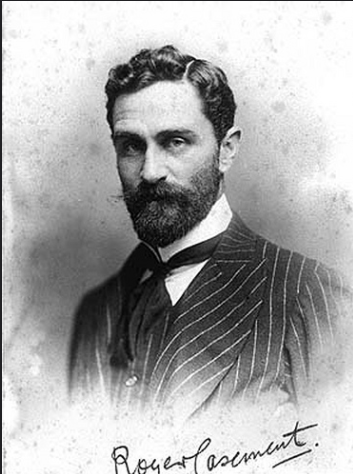
Received a present a few days ago of a new book called ‘Rebel Prods’ written by Valerie Jones who died in 2014. The sub-title says it all ‘Rebel Prods-The Forgotten Story of Protestant Radical Nationalists and the 1916 Rising’. It was prepared for publication by her daughter and son and published by Ashfield Press, Dublin. It was sent to me by the Church of Ireland Bishop of Clogher who was one of those who attended the launch in Christchurch Cathedral, just over a week ago. I very much appreciate his kind thought. I have only skipped through the book and read a few chapters so far. It is a most interesting read.
This book is full of information about the radical men and women from the Protestant tradition who took part in the 1916 Rising and many of whom have been written out of the history. There were those from the Protestant tradition who played a major role in procuring arms for the Irish Volunteers- Casement, Figgis, Conor O’Brien, Thomas Myles, Childers, Mary Spring Rice and Hobson. Some Protestant women took a leading part in forming Cumann na mBán. Elizabeth Bloxham from Westport was a founding member as were other radical Protestants from a middle class background. Kathleen Lynn was another woman from Mayo who played a major role in the Rising and afterwards. Countess Markievicz is, of course, the best known. These women had been radicalised during the suffrage movement and some belonged to the Gaelic League. Jones states: “The founding of the Gaelic League in 1893 was of seminal importance since it offered Protestants a chance to engage with the construct of Irish identity in a new way. And many did, particularly in the early days of the League. But no matter how much they devoted themselves to the revival of the Irish language, they found it difficult to overcome the view, propounded by those such as D.P. Moran that Protestants were not truly Irish, nor could they dissolve the perception that Protestants did not fully belong to the nation. Many quarters of Irish society still regarded them as ‘settlers’. There was often a caricatured stereotypical view of them as Anglo-Irish, upper class, privileged land-owning ‘horsey’ types, with English names and upper crust accents. This belied the reality..that many radical Protestants were from ordinary backgrounds and integrated into nationalist movements through kinship and friendship networks, which were key to radicalisation, in a similar way to their Catholic counterparts and co-conspirators.”(p351)
The late Valerie Jones has provided a very worthwhile account of the involvement of people from the Protestant tradition in the 1916 Rising which might otherwise have been ignored altogether. Why were they ignored and forgotten? Valerie Jones suggests that the impression of a Catholic rising was promoted soon after the Insurrection because the signatories were all Catholic and regarded as Catholic martyrs. However, she notes that some of the signatories had Protestant parents and James Connolly was married to a Protestant. And the many Protestants who were involved, like George Irvine from Enniskillen, Mabel Fitzgerald, Cesca Trench, Alf Cotton and the Norgroves were soon written out of the history. She suggests that because of his Protestant background Irvine was not chosen as the Sinn Fein candidate for Fermanagh in the 1918 election. Valerie Jones concludes: “Unlike the rebellions of 1798,1803,1848 and 1867, where the presence of Protestants in leadership roles was acknowledged, many of the 1916 Protestant rebels were written out of history and largely forgotten.” This book goes along way to correcting that omission.
Valerie Jones (1943-2014) was educated at Trinity and taught at the Church of Ireland College of Education, Rathmines. She was Diocesan Communications Officer for the Church of Ireland Diocese of Dublin and Glendalough. This is an important contribution to Irish historical research and to a fuller account of the 1916 Rising. We must be grateful to Valerie Jones and all those who have made sure that ‘Rebel Prods’ was published.
Unfortunately this is a story not often told in the present day. Those who want to preserve the status quo and thus the sectarian card, conveniently airbrush this aspect of our history from their narrative. I recently listened to free state ‘experts’ on RTE state the Rising was fundamentally a ‘Catholic Rising’. No mention was given of the Protestant participation and I suspect that’s their intent.
We are all too eager to blame those of the unionist persuasion for not wanting to reach out the hand for unification of Ireland. We regularly blame them for wanting to continue to sew division in an effort to maintain the status quo but be in no doubt there are those from the so called ‘nationalist’ perspective who want to maintain the status quo. They are just more subtle with their narrative. And there’s no better place to sew the seed of sectarianism than in the classroom. When teachers paint a black and white picture of the conflicts in Ireland I.e Catholics v Protestants and make declarations such as, ‘Irish republicanism was catholic’ then you know it is all too easy for kids to accept a false narrative and outlook.
One wonders if pennies are beginning to drop? Perhaps Joe is beginning to understand?
I am not an Irish Republican, but there is no doubt that the casual demonising of Unionists is one of the consequences of a simplistic Catholic/Irish narrative. Some of us have been trying to point this out, but to little avail.
“We are all too eager to blame those of the unionist persuasion for not wanting to reach out the hand for unification of Ireland. We regularly blame them for wanting to continue to sew division in an effort to maintain the status quo but be in no doubt…” – indeed, Wolfetone.
Perhaps contributors will listen you.
And it is summed up in the quote from Joe’s piece:
“But no matter how much they devoted themselves to the revival of the Irish language (and I might add whatever other aspect of ‘Irishness’ one identifies with), they found it difficult to overcome the view, propounded by those such as D.P. Moran that Protestants were not truly Irish, nor could they dissolve the perception that Protestants did not fully belong to the nation. Many quarters of Irish society still regarded them as ‘settlers’.”
Again, indeed.
And the pejorative, ‘settlers’, persists, unfortunately.
Of course Protestants played a big role in Irish Republican History. I know this article is mostly referring to the 1916 Easter Rising but I still think its wrong to portray it as if Protestants were deliberately “left out” or “written out of history”. We all know about Countess Markievicz and Roger Casement and many others. The very first Irish President, Douglas Hyde, was an Anglican, who served from 1938-1945. Hyde was an Irish Nationalist and Irish language activist. His Protestant background certainly didn’t hinder him becoming Head of State, the very first one, in fact. I believe one of the Leaders of the Rising, De Valera, was An Taoiseach at this time. De Valera was a devout Catholic.
I think why many Protestants/Unionists are referred to as “Settlers” (a term obviously used to insult) is because that’s where most of them ascend from: Settlers during the Plantation of Ulster. Insulting or not, that’s a major (and very disturbing) part of Irish History, which British Historian Niall Ferguson referred to as “a disaster, the effects of which is felt to this very day”. No one can say Niall is wrong. The whole point of the plantation was to hold down Ireland for the British Crown. Most people, including many British people themselves, view Unionists doing that to this very day: Holding down a piece of Ireland for Britain. Hence the term “Settlers”. There’s no point ignoring the fact too that many Unionists today don’t regard themselves as Irish at all, despite living in Ireland. Has Irish boxer Katie Taylor ever been called a “Settler”? No. Has Wayne McCollough from the Shankill Road when he represented Ireland at the Olympics? No. Both are Protestant and yet both got the full backing of Ireland. Even to insult, I think the term “Settler” is used mostly (if not always) for Unionists, whether Catholic or Protestant. Of course it shouldn’t be used for anyone.
Everyone knows that most Unionists are Protestants and most Nationalists are Catholic. Sectarian or not, that’s the reality. But does Protestant automatically equate to Unionist? Of course not but most of the time it does. But what we’re ignoring is political Unionisms hijacking of “Protestantism”. Whenever the IRA attacked the RUC, UDR, etc we often heard “This is an attack on Protestants”. Paisley spoke of the Civil Rights Movement, not as an attack on Unionism, but as an attack on “Protestantism”. Stormont wasn’t a Unionist Parliament for a Unionist people, it was a PROTESTANT Parliament for a PROTESTANT people. Political Unionism has centuries worth of History of playing and indulging in sectarian politics, hijacking the Protestant religions in the process. I believe that’s the main reason (not the only one) why most people (especially people from abroad) believe the situation in Ireland is: Catholic vs Protestant. Of course the British Government deliberately portrayed it that way, so as to portray themselves as some sort of neutral, reasonable peace keeper, trying to keep Religious extremists from both sides from killing each other.
My great grandfather on my mother’s side was Protestant. He met my great grandmother and converted to Catholicism. His family disowned him for that. From what I heard he wasn’t really that political but he would’ve been more a nationalist but that could’ve been due to living amongst nationalists in his later life.
Let’s deal with this misquote. I offer no opinion as to whether either ‘State’ was right or fair doing what they did, I merely offer the historical context, which is:
“The Hon. Member must remember that in the South they boasted of a Catholic State. They still boast of Sourthern Ireland being a Catholic State. All I boast is that we are a Protestant Parliament and Protestant State.”
Sir James Craig, Unionist Party, then Prime Minister of Northern Ireland, 24 April 1934
Reported in: Parliamentary Debates, Northern Ireland House of Commons, Vol. XVI, Cols. 1091-95.
Quoted in: Bardon, Jonathan. (1992) A History of Ulster. Belfast: The Blackstaff Press. Pages 538-539.
[The remarks above about a “Protestant Parliament”, and the similar ones below about a “Protestant Government”, are often quoted as: ‘A Protestant Parliament for a Protestant People’, or ‘A Protestant State for a Protestant People’.] ”
Sourced from, http://cain.ulst.ac.uk/issues/discrimination/quotes.htm
“My great grandfather on my mother’s side was Protestant. He met my great grandmother and converted to Catholicism. His family disowned him for that. From what I heard he wasn’t really that political but he would’ve been more a nationalist but that could’ve been due to living amongst nationalists in his later life.”
My mother in-law was a Protestant and converted to Catholicism. Her clan were not best pleased either. But correct me if I am wrong but did the Catholic Church stipulate that it was fine for Catholic and Protestant to marry as long as any future kids were ‘raised in the Catholic faith’? Surely that is divisive? And if I were a Protestant I would take offence to this subtle sectarianism. My grandparents were of different faiths(Protestant and catholic) and although my grandfather didn’t convert to Catholicism their kids were raised as Catholics. He didn’t take religion too seriously and didn’t hug the altar rails if you like but when he died very young my grandmother wanted him to have a Catholic burial. She believed seeing that all his kids were practicing Catholics that the church would’ve done the decent thing. Alas the Catholic Church in his area refused her request. Thankfully she managed to persuade another priest in a diocese several miles away to bury him.
The point I am making is that institutions such as the Catholic Church didn’t help matters or indeed fomented matters such as creating differences and therefore division between people on this island too. And they are still at it no matter what they claim in public. Obviously it works both ways and there were elements on ‘the other side’ who played the same subtle and at times unsubtle game.
I recall an account of all shades of republicans led by amongst others frank Ryan gathering at bodenstown in the 1930’s. You had socialists, IRA etc in attendance. Also in attendance was a delegation of Protestants from the shankill under a banner of socialism of some sort. Protestants from the shankill attending a Wolfe Tone commemoration would’ve been a welcome sight you would imagine? Alas some took offence allegedly, to them having a banner(apparently no banners were allowed) and they were beat up. Others believe their offence to the banner was a cover to hide their real animosity I.e they were Protestants.
People have been in Ireland for 10,000 years but Christian for only 1,600. Will Christianity last in Ireland another 8.400 or are we already beginning to see it’s dying embers?
Wonder if the Irish pagan polytheists of old created such communal strife among one another, laughing at the lunacy of the beliefs of their neighbours in the next mud hut or were they wiser than that?
The thing I remember about Bloody Sunday is Ken Fletcher’s shop going up on flames. I watched it from our back window. The next day we gathered at the bus stop outside the burnt shop to go to school. Some of us went looking among the ruins for sweets and a distraught Mrs Fletcher opened the front door and screamed at us scattering us like scavenging crows. Not only was Ken Fletcher the only shop in our area, he was a Protestant. The bombing campaign by PIRA during the troubles targeted mainly Protestant businesses and had to be partly responsible for the alienation of Protestants from their Republican roots and their Catholic neighbours.
I agree, conflict will always lead to betrayal and division.
The long and dirty war here, has alienated many people catholic and protestant from their republican roots and entrenched divisions all over this island.
I much prefer to read real life memories such as this though. I feel that it is important that we re-humanise the differences in our society
I totally agree with you Jessica.
Had the wishes of the fallen of 1916 been fulfilled,maybe just maybe an Ireland of equals as stated in the Proclamation would be the subject of conversation/debate,and not division.
I think the action at Soloheadbeg was a mistake that set the scene for future conflict. Armed struggle then became part of the cannon for change instead of dialogue.
Protestants Republicans were utterly untypical of southern Protestants in the early 20th century. To represent them as somehow ‘Irish’ is simply unhistorical. These Prods were the product of particular family circumstances, and not in any sense representative. To try and represent them as part of southern Irish Protesantism is inaccurate, and a product of wishful thinking.
” To represent them as somehow ‘Irish’ is simply unhistorical” – what does that mean, Ian?
Sorry, Jude, something got lost in the wash! Apologies. I think that the point I was trying to make, somewhat laboriously, was that ‘Protestant republicans’ were so unrepresentative of southern Protestants [SIPs] in general, that trying to use their republicanism to say something about SIPs – that, somehow, SIPs were ‘closet nationalists’ – is a distortion of the truth. There were three groups of SIPS from 1922 (and earlier) to the 1960s – two small groups, one unashamedly loyalist (largely in Border counties), one republican – with the vast bulk of SIPs in the middle, not irredentist or subversive, economically rooted in the State, largely accepting of it, living quiet lives, getting on with things.
Protestantism showed itself willing to accept some of the Catholic State’s wisdom (for instance, balanced budgets, the modernizing of local administration, the suppression of jobbery, education management reform and protectionism) and the fact that it was a guarantor of order. In 1924, the Provost of Trinity College expressed himself well-pleased with the Free State government; in 1936, the Irish Times was moved to write that ‘On many points of policy we agree, more or less cordially, with Mr de Valera’. Like Catholics, Protestants were condemnatory of socialism and suspicious of statism – one instance is the Gazette’s characterisation of the 1951 Mother-and-Child scheme as ’communist interference in the family.
Furthermore, prosperous Protestants at any rate, were able to withdraw into comfortable ghettos and self-imposed apartheid, even if these were seen as claustrophobic by some. The impetus principally came from class considerations and the relentless dilution of the tribe occasioned by Catholic insistence on the children of mixed marriages being brought up as Catholics. The effect was to create a Lilliputian civitas. In synods and vestries it had its parliamentary and local government. Public service could be undertaken in the governance of hospitals, schools, and a university. Voluntary engagement was through a cat’s-cradle of church and charitable bodies, choirs and freemasons, sporting and cultural organisations. The structure was all economically underpinned by Protestant firms and farms. It was quite possible to live a Protestant life, and die a Protestant death, without much troubling the other side. Which suited the other side, too. On the other hand, for poorer Protestants, especially urban ones, the ghetto hardly existed, and they were picked off all the easier by mixed marriages and economic emigration. And the ghetto was an abstraction in rural areas, too, where loneliness and isolation were endemic.
These were the representatives of southern Irish Protestantism, not the noisy republicans that Valerie Jones chronicles. That’s why the latter were ‘ignored and forgotten’. They weren’t significant in their communities, or much outside them.
I think that’s a fair summary of Protestant position in the south. But isn’t that true of most people in most states? They roll their eyes and go on going to work, going on holidays, greasing the cat’s boil…
Thanks. But the point is, I think, that Protrestants were never EXPECTED to be enthusiastic about the new polity (never mind rejecting it entirely). Thus, what I’m saying is, that if they did by accepting parts of it congenial to them, or get around it with parallel loyalties, this is worthy of historical examination, since it runs counter to the fate of many dominant minorities in Europe after WW!.
Where can I actually buy the book, “Rebel Prods” by Valerie Jones? I am currently of the opinion that the monograph is indeed a work of fiction in quite a literal sense for I cannot pick-up, purchase nor purloin a copy; from the Falls Road all the way out to Nutt’s Corner, it does nay exist.
Apologies for the sarcasm; but where da fook can I buy this book?
It’s published by Ashfield Press, F, so maybe check with http://www.ashfieldpress.ie/contact/index.php
Many thanks!
Must get this book.
Thanks for reviewing it.
One thing that gets me about this whole Catholic-Protestant identity issue is that there has been so much intermariage & conversion from one religion to another for all sorts of reasons that who can say what their ancestors were for sure unless they have done the research.
I am of Scots descent on my fathers side (although he was born & brought up in the south). My father would have described himself as an Irish Nationalist.
I was brought up an Ulster Prod.
My mother’s family were Methodists but had been Anglicans & were firm Ulster Unionists . I found out recently they were Catholic until 1850.
In my youth during the ‘Troubles’ I was a strong loyalist, but have matured into someone who is opposed to most things British, supporting a single Irish state and the abolition of the monarchy.
So pick the bones out of that.
Common I would say.
Tyranny is tyranny no matter what flag it is wrapped in.