
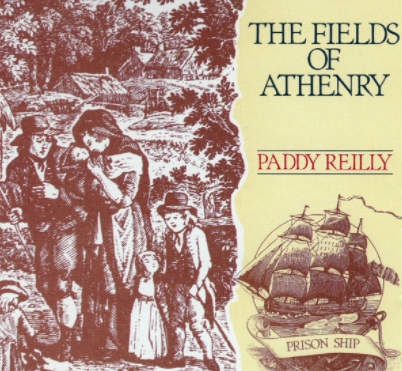
This line from the ever popular The Fields of Athenry, sums up why Irish republicans are always preoccupied with achieving freedom – not just for Ireland but for Palestine and for other oppressed people around the world. Indeed, the Irish struggle for freedom, in the early 1900s, inspired many other people in Indiaand elsewhere to struggle for freedom and justice in their own countries. It is acknowledged throughout history that when you’re free, you get on with living and expressing yourself but when you are in bondage, subjected to foreign rule, the obtaining of freedom becomes the main preoccupation. I believe that, no matter how long it takes, those who consider themselves to be Irish in this country and who feel their national identity is denied, will continue to agitate for justice and freedom for as long as it takes. They too will receive the support of those opposed to injustice. That is the way it has always been for people in subjection –even in Biblical times when Moses led his people out of slavery in Egypt to the Promised Land.
The denial of freedom to the Irish people has been a source of great discontent for centuries and has been the cause of a great deal of suffering and loss of life. The decision by the English government in 1800 to introduce Direct Rule from London ending whatever limited home rule they had achieved was seen by the Irish as a provocative decision. It was the British response to the United Irishmen and the 1798 rebellion which, had it succeeded, not only threatened their control of Ireland but threatened the Empire. The British were not going to take any more chances that the Irish people would unite to demand a form of self government. They quickly set about promoting one section over and against the other. The Protestant aristocracy continued to own most of the land. Industries favoured the northeast were the vast majority of Protestants lived. The Anglicans and Presbyterians slowly came together. During the 1800’s, as democracy spread in Europe and more people were given the vote, Irish people expressed their wish to be independent from Britain in election after election. Writers like Thomas Davis and Fintan J.Lalor demanded it as a right. That demand grew stronger after the Great Starvation inflicted on the people by a ruthless British governing class from 1845-1850. With the rise of the Fenians, then Parnellism and Home Rule, the demand for Home rule in Ireland intensified. The wishes of the Irish were not respected. The British rulers were determined to maintain control because it was, they believed, in their best interests.
Throughout the 19th century the British Tory party exploited the religious differences in Ireland to suit their purpose of retaining power and remaining in power. Because of the conflicting traditions – Irish and pro-British – as a result of many incursions from the neighbouring island and the settlement of many families from Scotland and England in the sixteenth and seventeenth centuries, there is still tension and bitterness caused by years of hostility much of it manufactured by the colonial power. The fact that the settlers/planters belonged to a different religious tradition was used by those in power to exacerbate the division and the hostility. The hostility, which is nowadays primarily about loyalty, is more evident in some places than others. It sometimes appears as naked anti- Catholic sectarianism. Catholics are often attacked and abused and their property is subjected to attacks. There are instances of attacks on Protestant/unionist owned property. However, there is general good will towards the unionist community and a willingness to facilitate and include them in a new Ireland situation.
The Partition of Ireland in 1920 resulted in two confessional states each of which excluded a section of the people. It created elites in both states -the Catholic ascendancy in the south and the Unionist/Protestant ascendancy in the northeast.
Instead of being strengthened under Brexit, Partition needs to be dismantled and we need to begin again with a clean slate. The issue arises of the accommodation of a minority who do not want any change. That issue becomes a matter for negotiation between the two governments. A new political arrangement needs to be created that will entice and encourage unionists to be involved in a New Ireland. Since a majority in the North voted in the referendum to Remain in Europe a way must be found to respect that vote. The only way that many can see is to switch sovereignty from London to Dublin, to leave the North as it is, to keep the Assembly in Stormont, and allow the English monarch some role there as the one to whom a section of the people owe their allegiance.
The New Ireland I envision is a state where the unionists will feel comfortable, where equality is paramount and where the human and civil rights of all citizens are protected in law.
Brexit has presented the people of Ireland with an unexpected opportunity to move on from the past and into a new future where the people who live on thisisland of Ireland will work together for the common good of all the people of this small island. I believe it is worth a try, and I would urge the Dublin andLondon governments to do all in their power to encourage all the parties to pursue this approach to resolving our difficulties.
Let the south come to the north this time with offers that will persuade most unionists that their best interests lie in some form of a unified country in a society where the rights of all are guaranteed and where the Unionist attachment to and affection for the English Crown is respected and catered for. The President remains in place as President of Ireland for all the people of this island. Most unionists, I believe, have already begun to accept this. The Queen could be a monarch for those who want her to be their monarch. In the new political dispensation arising out of a majority favouring reunification in a future poll, sovereignty is transferred from London to an all-Ireland parliament wherever that is based.
The British have a key role to play in bringing about the New Ireland by becoming persuaders of the Unionists that their best interests lie in working closely with the rest of the Irish people on the island of Ireland. The Irish have also an important role in making it clear to unionists that they have a place as equals in any new political arrangement and their rights will always be respected in a new political situation.
The problem with the ‘republican’ ‘struggle’ for ‘freedom that Joe eulogises without question, is that it insists in achieving its own ‘freedom’ at the expense of the freedom of others. Not content with a state for themselves covering the majority of Ireland they insist they must also control that part of Ireland where the people’s free choice is to remain in the UK. And worse: Not only do they seek to snuff out this freedom but they seek to do so through wicked violence.
On some of the specifics of Joe’s article there are some falsehoods that need to be rectified and some assertions that need to be challenged.
First, there is no evidence that ‘the Irish’ viewed the Act of Union as ‘provocative’. Indeed many welcomed it as it brought with it the prospect of Catholic emancipation. It was the Protestant elite who had most to lose and hence had to be bribed to support it. As for the peasant masses I doubt they were even aware of it let alone cared either way.
Ironically, despite what Joe says, the Union was the beginning of the end of the Protestant Ascendancy as 19th century British parliamentary reforms progressively reduced their power and increasingly democratized the country.
Joe also tells porkies when he says Irish people expressed their wish to be independent from Britain in election after election. In fact it was merely home rule that they supported.
It is rather naive – and perhaps dishonest – of Joe to say that there is general good will towards the unionist community among Catholics. One only needs to read the articles and blogs on this site immediately to question such a claim. The very fact that most nationalists want to end unionism and remove unionists from their state, and that they vote for a pro-terrorist party that continues to glorify atrocities against the Protestant community,
does not suggest goodwill.
‘Partition’ doesn’t ‘need’ to be dismantled: that is merely Joe’s wish.
I doubt either the Dublin or London governments will pay any heed to Joe’s urging.
And there is no ‘English’ monarch and hasn’t been for over 300 years.
If we are to respect the decision of what you call the “north” to stay in the EU-can we expect the decision of Northern to remain within the United Kingdom to be respected?
Please tell me how Dublin will keep me in a style to which I would like to be accustomed too-Any additional taxes should be paid by people only in the 26 counties to fund uniication-might curb the enthusiasm of 26 county state to absorb us all-also all debt incurred by the 26 county state should be paid back by people of the 26 counties-Northern Ireland did not get EU bail out so should not be required to pay it back in the event of a unity state
Been reading a lot about Brian D’Arcy-you could do with worse than taking him as a role model Joe.
A lovely Fermanagh man-a friend to all
Brian D’Arcy and Joe McVeigh: two very different representatives of the Fermanagh priesthood. I know with which one I’d rather spend an evening.
D’Arcy, the prototype for Dermot Morgan’s “Father Trendy”,hobnobs with the rich and famous and, on top of his Church salary as Abbottearns fees for innumerable appearances on BBC, the Late, Late Show and excruciatingly banal articles in a weekly gutter rag. My first acquaintance with Joe was when he travelled down fron Fermanagh to visit us internes in Long Kesh. He was no doubt aware that we were in no position to offer him fat fees, that there was no celebrity MC to fawn over him,that his every word would not be greeted with clacker-board generated applause and laughter. No kudos for him. But he came anyway. Again and again. (A belated thanks to you Joe). I know who I would prefer to spend an evening with.
With a priest who is an apologist for nationalist terrorism? Nice.
Tam you milk your cow and I’ll milk mine.