
by Joe McVeigh
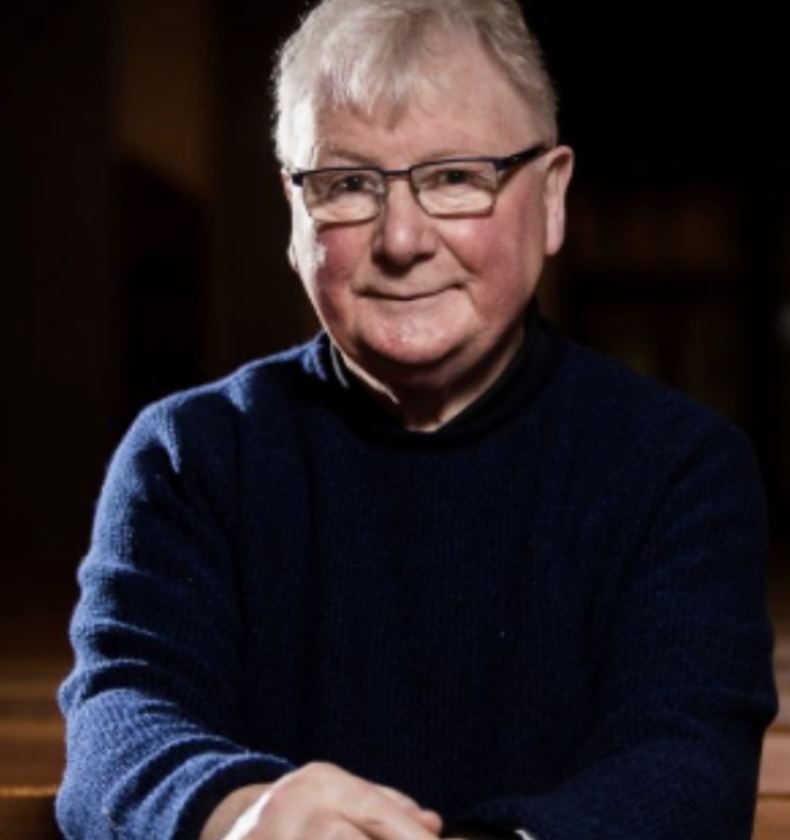
At the Ireland’s Future meeting during the Féile in Doire on 14th August 2026, I said that since the Good Friday Agreement in 1998 we are on a journey. That journey will take us to the re-unification of Ireland –to right the wrong that was done over 100 years ago- the partitioning of Ireland in 1920-21.
Mr Burnham must not know anything about that injustice or he would not have come out with the balderdash he did today in Belfast. How insulting!
I believe that the work we (progressives) are engaged in is the work of decolonisation. It is an exciting journey towards freedom for all involved. Rev Karen Setheuraman is a good example of someone from a unionist background who is on a journey with us. Thankfully there are others from a unionist background like her. Unfortunately the leader of FF who happens to be Taoiseach has not begun the journey nor has the Brit PM Burnham.
Decolonisation involves firstly the decolonisation of minds and mind-sets. (The late Sean MacBride made this point many times during his life.) One mind-set prevalent in the 26 counties is the Partitionist mind-set. This mid-set does not want change in the political status quo. They keep on talking about the need for reconciliation without realising that the way to a true reconciliation process in Ireland is through a border poll. Ireland is not Scotland. We have a different history and background. Burnham should not compare us.
We in the progressive camp in Ireland are also involved in the conversion of hearts. We have to rise above the hurts of the past and create a new future for all -especially for the young people.
Part of the decolonisation process is the restoration of the Irish language and Irish culture. There is also the need to create a new democracy based on a new constitution and accompanied by an ongoing process of Reconciliation.
Talking about Irish unity and the New Ireland is not enough. It is essential that we talk and discuss and write but we must prepare carefully and strategically for the Border poll so that people will know what they are voting for when they vote “Yes” in the Referendum.
Whether Mr Burnham likes it or not ‘the times they are a changing.’ Rev Karen Setheuraman’s talk at the Ireland’s Future event during the Féile event in Doire Cholmcille was inspirational. She reminded us that the work of reconciliation is ongoing and will never end.
All the talks were great and the work that Ireland’s future is doing in providing arguments and a platform for people is most important for the future generations of this island.
It might help if the Southern government took an interest in uniting the country, but it seems they don’t care. Besides, under the terms of the GFA only the Secretary of State for NI can call a referendum. You can thank Sinn Fein for agreeing to that condition.
This is true. I suppose it was the best SF could manage at the time, considering they weren’t in the position of being the largest party in the north at the time? I remember reading that the late David Ervine (RIP) was going to pull the plug on the deal ( despite having practically zero representation at the time) if Republicans pressed for earlier release of POWs? Begs the question, why? Times were certainly different back in 1998. Weren’t they Jeffrey?
Burnham’s Belfast Blunder
Many people in Ireland will recall Mrs Thatcher’s futile attempts to stifle debate concerning the development of democratic institutions in Ireland. In spite of a gift of spectacles, Keir Hardie could not see a referendum on Irish unification on the horizon. Mr Burnham may not have room on his table for a border poll, however, the issue is centre stage in various locations throughout the country.
The secretary of state will only call a referendum if it has a reasonable chance of success. The fact is that if a border poll was held in the morning it would be lost, and the issue would be put to bed for another generation. Opinion polls (even after Brexit) consistently show that the majority of voters in Northern Ireland want to maintain the status quo, including a significant minority of people who normally vote for nationalist parties.
At the last general election, two years ago, 60.9% of the votes in Northern Ireland were for parties that either want to maintain the union, or are neutral on the matter. Of course a referendum is a different matter, but in Northern Ireland voting patterns tend to follow a very strong correlations.
Of course there are compelling arguments for Irish unity. But there needs to be a seismic shift in Northern Ireland if a border poll is to stand any chance of success.