
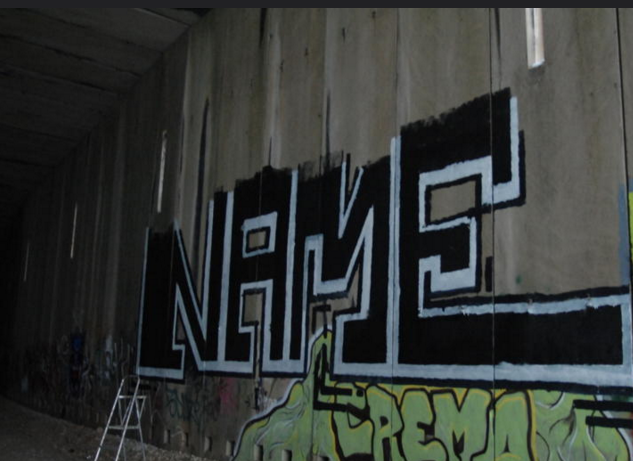
‘What’s in a name?’ was the thought provoking title of a piece by Mr Donal Kennedy on this here very blog.
If I might answer such an open question I would have to reply ‘a potential Pandora’s box of identity crises’.
I have a special shelf dedicated to puncturing the various nationalistic bubbles that many people inhabit e.g. Orange men (the battle of the Boyne had more to do with banking & credit systems than religion), Apprentice Boys (many of the original 13 little scamps spoke Gaelic and there used to be a presence of the Roman Catholic clergy at marches) to An Gorta Mor (thousands if not tens of thousands of estates were seized by the government in an effort to punish neglectful landlords and kick-start a new self-sustaining system).
On said shelf is a particular favourite of mine from which I have committed to memory key notes in the off-chance that I might have Sunday tea with DUP/TUV relatives in deepest Antrim or find myself in an Irish bar abroad surrounded by those who favour a ‘less complicated’ version of history, namely a book in an encyclopedic format which categorises the most popular names of Ulster and their origins.
So, in keeping with Mr Kennedy’s piece here are several factoids to keep up your sleeves should you find yourself in company with suitable feather-ruffling potential:
TEA PARTY TYPE A: SUNDAY TEA WITH DUP/TUV RELATIVES IN RURAL ANTRIM
Thompson: Not an exclusively English name after all, it is the anglicised version of the Gaelic names MacCavish/MacTavish and MacComb, north Antrim being a notable example of this.
Johnson: In some cases it is the anglicised equivalent of ‘MacShane’, Shane being a particularly northern example of the name John/Sean
Black: Like many names of a coloured motif the name itself may not necessarily be a simple English name. In the case of some ‘Blacks’ the Gaelic ancestor is linked to the clans Gregor, Lamont and MacLean
Campbell: From the Gaelic ‘twisted/crooked mouth’, the thought process being that Campbell was an early name given to those none-Gaelic speakers in Scotland when the Scots(Irish) arrived there (a similar etymological logic is found in the various Slavic languages in that their word for Germans is ‘Nemachki’, loosely translated as ‘the dumb ones’ meaning ‘the non-speaky-our-language-speakers)
Gil-something e.g. Gilroy, Gilmore, Gilespie: As a lad I’d always thought of these as good Protestant names. It turns out that ‘gil’ means servant in Gaelic and can be either Scottish or Irish (like many things…)
Glasgow: A variant of MacCloskey, the very Irish name common in north east Derry (who’d have thunk it?)
Fullerton: Actually until relatively recently wholly interchangeable with MacCloy/MacLewis
MacCausland: Although there’s no hard hard evidence it is generally thought that MacCausland was founded by a member of the Irish O’Cahan/O’Kane clan in Scotland (no laughing at the back!)
Gibson: From MacGibbon and MacKibbon, both ultimately derived from the Gaelic ‘son of Philip’
Robinson: The name itself has been interchanged over the years with Robertson (MacRobert), particularly in parts of Co Antrim, so it may not be without some ‘Gaelic contamination’ after all…
Kerr: An interesting name in that it can be of various origins e.g. border reavers that were transported to Ulster or that it interchanged often with the Irish name ‘Carr’ or (in Donegal) an anglicised version of MacIlhair
Kilpatrick/Patterson: Son of Patrick (ironically…)
Allister: An Anglicised Gaelic translation of ‘Alexander’.
Smith: A whole range of options including MacGawen, MacGovern and many others besides.
PARTY TYPE B: ST PATRICK’S DAY PARTY IN AN AMERICAN-IRISH BAR
MacSorley: From the MacDonnell clan who established a foothold in north Antrim, offspring of ‘Sorley Boy MacDonnell’, Sorley being the anglicized version of the Gaelic version (phew!) of the Norse name ‘Somer led’ i.e. Summer raider/mariner
MacQuillan: A Hibernicized version of the name ‘De Mandeville’ e.g. part of the wave of Anglo-Normans in the 12th century
Bourke: From De Burgh, from the same sort as the aforementioned De Mandevilles
MacKeever/MacIvor: Sometimes (but not always) from the Gaelicised version of ‘son of Ivar’, Ivar being a Norse name
MacKeag, MacKeague, Montague, Teague: The modern day champions of a name once so popular in Ireland that it begat the derogatory name ‘taig’, the predecessor being ‘Tadhg’. These names are part of the dense tundra of names that can be either Scottish or Irish so trying to hack your way through this philological forest is an unrewarding task.
MacCaffrey: Gaelicised Norse name ‘son of Godfrey’
MacAuley: Gaelicised Norse name ‘son of Olaf’
MacCabe: Thought to have been a family in the service of the MacLeod Gallowglasses (MacLeod being a Gaelicised Norse name ‘Son of the ugly one’)
O’Rourke: ‘Son of Ruarc’ from the Norse ‘Hrothrekr’
Russell: Of many different origins including the Norman version which loosely translated means ‘red haired one’ (a similar theory as to how Russia received its name courtesy of Scandinavian raiders there who set up the ‘Kievian Rus’ nation, ‘rus’ again denoting the red hair, seemingly a common theme of the northmen).
O’Sweeney: Another ‘Gal-Gael’ name with various roots including the Norse-derived ‘Son of Sven’
There are many names that fly under the radar like those above including ‘stalwart’ names like Cunningham and Clarke but you can buy your own book if you’re really that interested.
NOTE: I’m not a historian (not by a long shot) rather I’m a historical bin-hoker. (A proper historian would objectively home in on primary sources without any bias and not fall into the trap that many of us in the north do which is to come up with a conclusion first and then find evidence to support it, that’s not how it’s supposed to be.)
I can’t guarantee the accuracy of these summaries as it’s a very rough science but if you are interested in more row-starting material then seek out Robert Bell’s ‘The Book of Ulster Surnames’.
One last one:
Collins: “In the west if Ulster Mac Coileain was anglicised to Collins as well as Caulfield… O’Coileain (Cullane), from coilean, meaning ‘whelp….”
Re being a sonuvabitch – I know that. Several people have told me.
Console yourself then, Jude, in the knowledge that at least you earned yours!
I think that’s a compliment, maybe.
One you missed,jude, was that a lot of Irish/Scots Campbells were MacCathmhaoil or sa Sacs Bearla McCawell. This being a blog that attracts many intelligent and eclectic people, I wonder can anybody confirm or deny that the colonial administration here would not accept native versions of names or surnames. The number of people called Seán or Eamonn and who were baptised John or Edward is astonishing.
AM Ghobsmacht, firstly, ta bron orm, I was sitting at work responding to your question, ironically on similar point earlier this week, I had a wild bad internet connection being out of office so it’s somewhere between Dublin and Hook Head.
i recall Bell’s book while at QUB many decades ago, there are others.
In response to what you, previously raised about ‘unionists’ with names like O Neill, I know, been married to one for a wild long time, as I frequently point to, she’s just as Irish in name than I am in mine.
One point, perhaps lost on many is the close relationship which has always existed between north Ulster and west Scotland, the old ferry from, I think, Cushendall, went daily between both states, perhaps providing the anglicised version of names found here now due to, similar to others, being forced to anglicise to get famine relief during an gorta mór, speculation but, why my great grandfather spelled his name with our own language during 1901 census instead of with the, non Irish ‘y’ it’s commonly spelled with.
Now,and finally, whelp, thankfully I’m mid not west Ulster but, there’s dozens of them thar.
One relevant surname does not feature in your estimable piece, Am Ghobsmacht, a chara, but that is understandable.
That is because it is a surname which has only of late insinuated itself (again) into the Irish psyche. Despite being a surname of indubitable Gaelic origins.
Last Friday night he of this surname graced the Kingspan Park in Ulster (no, not the one in Cavan Town but the one in Belfast City). Unfortunately, for Rodney Ah You (for it is he!) he was on the losing side. Even though he is a member of the Connacht team (whose rosc catha is the old Cromwellian war cry ‘Give ‘em Hell !’) it seems they only brought their P-game, P for Purgatory to the party.
The reason why there is not the slightest doubt about the origins of this most endearing of all surnames is too obvious to belabour:
-Ah You.
This is a direct translation from:
-A Chara.
Rodney A Chara ? Nothing at all odd about that. What indeed could be more normal amongst us over-friendly Irish? Also, back in the Fabulous Fifties a star forward of the Liverpool FC team was one (gulp) Alan A’Court. Indeed, he played five times for England and in fact, the only goal he scored was against (gasp) Norneverland in Wembley in 1957.
Despite that goal and another from the dystopian Duncan Edwards the visitors (even bigger gasp)won 3-2.
The losing England manager on that occasion was, erm, Walter Winterbottom. Which surname, come to think of it, could also have a Hibernian origin. As indeed could A’Court itself. (Cuirt an Mheanoiche / The Midnight Court, anyone?)
But, to offload back to Rodney Ah You. Should Rodney opt to drop anchor and remain west of the Shannon who knows but Ah You as a surname might morph in the due course of time from the singular to the plural. After all, Connacht RFC under Pat Lam is the ROMANTIC sports story of the moment on this side of the Irish Sea just as the, erm, Foxes of Leicester City FC is over on the Mainland.
And this very plurality might well present a problem. From a pronunciational aspect, one hastens to add. Not least in the event of his playing in Belfast.
A bit of backstory here.
This year marks not only the 50 th anniversary of Nelson coming down in Dublin for the last time but also (gulp) the first time y.t. went up to Belfast. To Casement Park, as part of a travelling thespian troupe to put on a a pageant called ‘Seacht La, Seachtar Fear’ / ‘Seven Days, Seven Men’ as part of the, erm, un-nuanced 50th anniversary celecommemoration of Easter Week, 1916.
The pageant was chronologically inclusive. One featured as the seventh in a line of ten Franciscan Friars, shuffling slowly with hooded heads bowed and hands piously joined. And as we passed under a rickety article of scaffolding, high on top of which was perched a, erm, perky local boadie manning the floodlights, this sharp question was suddenly posed:
-Hows about ye, down dar ! Would any of youse have t’right time ?
With that, ten 7th century habits were automatically pushed (out of habit) back to reveal ten 20TH wrist watches (none a Rolex, some with the right time).
The philological question, possibly hypothetical , which raises its hooded head here, is:
-Should the surname Ah You be pluralized as:
-Rodney Ah Ye, or, Rodney Ah Youse ?
(In the original Gaelic there is no ambiguity: A Chara / A Chairde).
Rodney Ah You, a la Abou Ben Adhem, may his tribe increase !