| (Ballingeary & Inchigeela Historical Society Journal 2016)
On February 8, 1917, in the wake of the first By-Election victory to endorse the 1916 Rising, the Unionist Irish Times concluded that, in a General Election, John Redmond’s Home Rule Party “would be swept out of three quarters of their seats in Ireland by the same forces that carried Count Plunkett to victory in North Roscommon, believed to be so peaceful and so free from Sinn Féin and the rebellion taint. The significance of the contest is to be found in the light which it throws on the mind of rural Ireland at this moment. Here is a constituency where three- fourths of the electorate are peasant proprietors under the various Land Purchase Acts. Yet 3,023 of these men record their voice for the candidate recommended to them because he was the father of one of the leaders executed in Easter Week.”
The Irish Times had been prescient, even if it underestimated just how overwhelming would be the Redmondite wipe-out in the December 1918 General Election, the loss of 90 percent of the Party’s seats to Sinn Fein. (Ulster counties and Waterford being the exception.) But how many people are aware that, eight years previously, the Redmondites had already lost eight of their nine Cork seats to the All-for-Ireland League of William O’Brien and D. D. Sheehan? Or that such a victory over Redmond’s Party had been won by the forging of a remarkably strong alliance between tenant farmers – then in the process of becoming peasant proprietors – and farm labourers?
I must say that I myself was essentially ignorant of that decisive turn in Irish political history until I read The Cork Free Press in the Context of the Parnell Split: The Restructuring of Ireland 1890-1910, a book by Brendan Clifford, published in 1997 by the Aubane Historical Society of Millstreet, North Cork. Two further Aubane publications – Canon Sheehan – A Turbulent Priest by Brendan Clifford (1989) and D. D. Sheehan – Why He Left Cork in 1918 by Jack Lane (2003) – added to my store of knowledge of the AFIL. Further research on my own part for an article on the 1916 West Cork By- Election (Irish Political Review, July 2009) and for a critical review of John Borgonovo’s 2013 book The Dynamics of War and Revolution – Cork City 1916-18 (Irish Political Review, December 2013) convinced me all the more of the significance of the 1910 triumph of the AFIL in Cork for the National Revolution itself.
William O’Brien of Mallow had come to the fore in the 1880s as an outstanding journalist, Nationalist MP and Land League agitator. He was the effective architect of the 1903 Land Purchase Act which ended landlordism in Ireland. Yet the doyens of the Irish Party, led by John Dillon, were hostile to the element of dialogue and compromise which the Act involved, and sought to obstruct its progress. But Canon P. A. Sheehan, of the North Cork parish of Doneraile, and D. D. Sheehan, MP for Mid-Cork (no relation), set about ensuring that Cork tenant farmers took advantage of it. As Brendan Clifford put it: “Land purchase took off in County Cork against the grain of the political activity of ‘the Party’. And that was the beginning of the great rift of national politics in Cork. Up to 1909 there were 16,189 sales in Cork and 774 in Mayo ( where Dillon’s influence was paramount). And in the Congested Districts of each county, there were 1,785 sales in Cork and 497 in Mayo.”
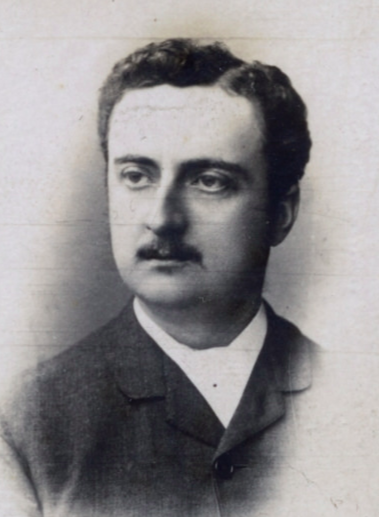
D. D. Sheehan from Droumtariffe, near the North Cork town of Kanturk, had been the founding President of the Irish Land and Labour Association in August 1894, which was to grow to over 140 branches in Counties Cork, Tipperary and Limerick. The ILLA’s purpose was to fight for the interests of rural labourers. With the death of the sitting MP for Mid-Cork in 1901, Sheehan sought the nomination and, despite the attempts of John Redmond’s strong man Joe Devlin to disenfranchise ILLA branches at the selection convention, Sheehan won through. He went on to be elected the new MP for Mid-Cork in the May 1901 By-Election. The 1906 Labourers Act was his most substantial achievement, providing cottages, with an acre of land, for 40,000 farm labourers and their families, 7,560 of them in County Cork itself, which became known as “Sheehan cottages”. The number of such cottages nationally was later increased to 60,000, housing a quarter of a million souls.
Sheehan was to be returned unopposed in the January 1906 General Election. But, resenting the nature of his activities in the interests of farm labourers and tenant farmers alike, the Party leadership expelled him. Sheehan, in turn, resigned his seat in November 1906, and stood as an Independent Labour candidate in a December 1906 By-Election. The Party leadership, however, funked Sheehan’s challenge to mount a candidate against him, and he was once again returned unopposed.
In April 1908 William O’Brien, along with other excluded MPs, responded to John Redmond’s overtures and rejoined the Party. The fragile unity did not last for long. Differences again came to the fore at the Party Convention held in Dublin in February 1909, attended by 3,000 delegates. The Convention was packed with “Mollie Maguires”, members of the sectarian Ancient Order of Hibernians who had been mobilised by their Grand Master, the Belfast MP Joe Devlin, to employ strong arm tactics on behalf of Redmond. It was called the ‘Baton’ Convention by O’Brien, as those of his supporters who attempted to speak were assaulted with batons by AOH thugs. Indeed, as their instructions to “prevent anybody with a Cork accent” from approaching the platform had been overheard, O’Brien first named his new paper The Cork Accent, before it became The Cork Free Press. As a daily, it would soon overtake the Hibernian Cork Examiner as Cork’s principal newspaper. In March 1909 O’Brien founded the All-for-Ireland League in Kanturk, along with D. D. Sheehan MP. A key co-founder of the AFIL was Canon Sheehan, novelist and Parish Priest of Doneraile, who penned a powerful anti-AOH editorial for the first issue of the Cork Free Press, on June 11, 1910: “We are a generous people; and yet we are told we must keep up a sectarian bitterness to the end; and that Protestant ascendancy has been broken down, only to build Catholic Ascendancy on its ruins.”
The All-for-Ireland League anthem proclaimed its anti-sectarian creed:
Hostile sections in the past,
We shall now be friends at last:
All our classes, clans and creeds
Rivals but in patriot deeds.
Here we come at Erin’s call,
From cottage home, and stately hall,
For her rights to stand or fall –
ALL FOR IRELAND ! ONE AND ALL !
Just outside the West Cork town of Clonakilty, the Darrara Branch of the AFIL, home parish of my native Irish-speaking maternal grandfather Larry Keohane, had its banner proclaim that same message of overcoming past racial and sectarian hatreds: “We hate the Saxon and the Dane, We hate the Norman men, We cursed their greed for blood and gain, We curse them now again. Yet start not, born Irishmen, If you’re to Ireland true, We heed not blood, nor creed, nor clan, We’ve hearts and hands for you.”
Redmondism was defeated by the AFIL in Cork over the course of two bitterly contested General Elections at both the beginning and the end of the year 1910. In Mid-Cork, D. D. Sheehan defeated the Hibernian William Fallon by 2,824 votes to 1,999 in January 1910, and he defeated T. Corcoran by 2,738 to 2,115 in December 1910. Sheehan related what he had been up against: “I was left to fight my battle almost single handed, having arrayed against me two canons of my Church, and every Catholic clergyman in the constituency, with two or three notable exceptions. The odds seemed hopeless but I scored a surprising majority and I have good reason for stating that 95 percent of the illiterate votes were cast in my favour, although a most powerful personal canvass was made of every vote in the constituency by the clergy.”
On January 28, 1910, the Cork Accent published “The Ballad of D. D. Sheehan”, which began:
Men of mid-Cork prepare yourself before it is too late
And prove to Josie Devlin that you will not tolerate
To be represented by a henchman of his choice
But send him back from where he came in no uncertain voice.
Say who is Billy Fallon or who heard of him before
From the village of Kilmichael to the cross at Donaghmore
Or far famed Ballingeary all over dell and glen
By the River Lee to Inniscarra where brave Mackey drilled his men.
When the sheriff and his agent and the burly peelers came
To hunt you from your homesteads in the King of England’s name
Who was foremost in the struggle to stop that hellish work
But the gallant D. D. Sheehan ever member for mid-Cork.
It concluded:
Shout it back to Josie Devlin and his standing committee
To the laity and the clergy of every degree
That no power can damp your gratitude that burns in your souls
When you boldly vote for Sheehan and elect him at the polls.
Mid-Cork sent its answer right back to the mob
With that young fellow Fallon who was seeking the job
That they wanted no Mollie to be their MP
They had what they wanted, and that was D. D.
And so the AFIL had triumphed over Redmondism in Cork, winning eight of its nine parliamentary seats in that fateful year of 1910. A Redmondite “win” in the November 1916 West Cork By-Election was no more than a Pyrrhic victory. The successful candidate’s vote was less than his vote in 1910, and less than the combined vote of two rival AFIL candidates. For, by now, the AFIL leadership was in disarray, because of its condemnation of the 1916 Rising and its support for Britain’s Imperialist War against Germany. But if the leadership was in disarray, the AFIL’s activists were not. Throughout Cork, they seamlessly merged with both Sinn Fein and the IRA. The key staff of the AFIL’s Cork Free Press were Sinn Feiners to the core. It’s editor, Frank Gallagher, became the outstanding editor of the outlawed Dáil Éireann’s underground Irish Bulletin during the War of Independence. Another O’Brienite activist, the paper’s GAA correspondent Tadhg Barry, would be elected Alderman on a joint ITGWU/Sinn Fein ticket in the 1920 Cork municipal elections. As D. D. Sheehan proceeded down the political dead-end of supporting and recruiting for Britain’s War to the bitter end, the December 1917 to January 1918 correspondence between Frank Gallagher and William O’Brien saw the AFIL leader decide to change tack and publicly endorse Sinn Fein, as he would also go on to denounce the British Imperialist War he had previously supported.
If Frank Gallagher and Tadhg Barry epitomised the Republican transformation of the AFIL in Cork City, the transformation in Cork County had military as well as political significance. In the townland of Ballinadee, outside Bandon, the transformation was well underway even before the 1916 Easter Rising, where the near quadrupling of its Irish Volunteers company numbers between May 1915 and April 1916 led the RIC county inspector for West Cork to take particular note in reporting that “they are almost entirely composed of farmers’ sons of military age, who, before the war, were followers of Mr O’Brien MP, but who are now in opposition to his pro-war policy”.
This was primarily due to the leadership role played by one outstanding Ballinadee family. As the Cork Free Press reported in June 1910, one of the AFIL’s pioneers was Robert Hales of Ballinadee, who was elected on its platform to both Bandon’s Rural District Council and the Poor Law Board. His eldest sons – Sean, Bob and Tom Hales – had also been committed AFIL activists. Michael Collins ensured that Tom Hales became the commander of the IRA’s Third West Cork Brigade upon its formation in January 1919, while Sean became commander of its Bandon Battalion. Both Bob and Sean Hales, together with their brother Bill, participated in that decisive IRA victory, the March 1921 battle of Crossbarry. As Tom Hales would put it in June 1941, “there would not be a parliament in Dublin but for the Ballinadee crowd”.
There had been a similar AFIL involvement on the part of the Collins family in the Clonakilty rural area of Lisavaird. Michael Collins himself was working in London during those AFIL years, but his older brother, Johnny ‘Shafter’ Collins, became the first President of the AFIL’s Lisavaird Branch. When it came to the War of Independence, Johnny shared the Collins family predilection for intelligence work. It was as such that Johnny Collins was involved in the prior work of planning the November 1920 Kilmichael ambush, as well as a subsequent ambush at Rosscarbery.
In his 1972 memoir, Towards Ireland Free: The West Cork Brigade in the War of Independence, Liam Deasy of Innishannon, who had served as Adjutant of the IRA’s West Cork Brigade from August 1919, and as its Commandant from April 1921 (following the capture of Tom Hales in July 1920 and the death in action of Hales’s successor, Charlie Hurley, in March 1921), would recall the vigour of the political conflict he had witnessed in his early teens, in sharp contrast to the overwhelming, unchallenged, dominance of Redmondism elsewhere in Nationalist Ireland: “The elections were, in most cases, closely contested. House to house canvassing took place, public meetings were held, and feeling ran high. The keen political rivalry between the O’Brienites and the Redmondites, which I witnessed in my native district during the years between 1909 and the outbreak of the first world war, was peculiar to County Cork for the reason that nowhere else, save perhaps in North Louth, was the sway exercised by O’Brien so strong as in Cork City and County. And it may well be that the interest in political affairs roused throughout Cork by the struggle between the two opposing parties of the O’Brienites and the Redmondites helped to stimulate the extraordinary enthusiasm and drive that Cork City and County showed later in the Volunteer movement during the War of Independence.”
The West Cork Brigade’s victories at Kilmichael and Crossbarry shook British rule in Ireland to its foundations. As the song says, “The boys who bate the Black-and-Tans were the boys from the County Cork”. The IRA’s West Cork Brigade had nonetheless been created and commanded by the former AFIL activist Tom Hales; Michael Collins’s brother, the former AFIL local leader Johnny Collins, was to be involved in the planning of the Kilmichael ambush; and the former AFIL activist Seán Hales was to be a Section Commander at the Battle of Crossbarry. In fact, the boys who bate the Black-and-Tans were Continuity AFIL! The decade of centenaries was officially designated to commemorate the momentous events from 1913 to 1923. But, for Cork, it should really have commenced with 1910, and marked the decisive political changes wrought by the All-for-Ireland League in that year. |

Comments are closed.