
When the Financial Crash and the Great Depression of the 1930s occurred, financial services were but a fraction of their size of the economy as it stands today. Indeed, it’s a surprise that this has lasted as long as it has, given that Marx predicted ‘financialisation’ of the whole economy to be the end-point of capitalism. All that money and those resources concentrated in the hands of so few people really cannot be healthy. The idea that private benevolence and the hidden hand of the market will resolve our economic woes is rather like trying to starve an infection out of the body without first administering the anti-biotics.
We need government money to pour into the economy in wages, to increase the purchasing power of the population – which creates jobs to deliver the goods and services they spend it on.
One of the good things that has come from the Brexit vote is that the British Government has had to concede to spending more money and expanding the public sector. Although the vote itself carried no specific messages, it was a general backlash against globalisation and free market capitalism. People, authoritatively, want to live in a national democracy where big business and financial services can come under the control of an elected sovereign parliament. In realising this trend, both the public and private sectors will have to create more jobs in order to adhere to their compliance responsibilities within each nation state, given that they will not want to abandon their domestic markets therein.
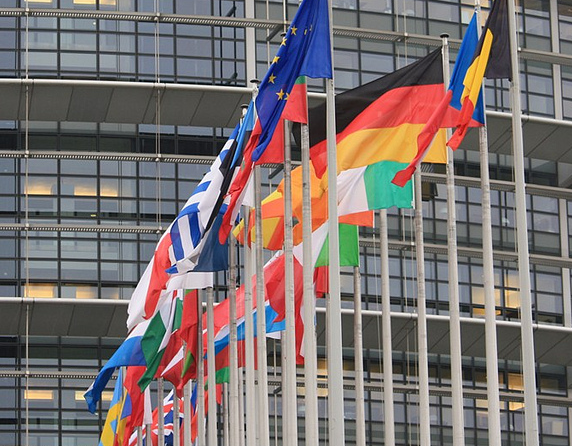
I don’t believe the European Union can survive, let me be clear about that. There are deep structural problems between Northern and Southern Europe in terms of their economies, which make it almost certain that some states will exit the single currency. I am an Irish Republican Euro-Sceptic, 1970’s style; I don’t want to be governed by Germans anymore than I want to be governed by Brits – when I can’t elect them nor remove them. It’s not hard to understand.
If there is one epitaph that I want in life it is to be remembered as a Prophet; as someone who had some sense of how things were moving and what direction in which we should travel. So when the European Union does collapse, and it will, we need to have a debate about what follows. Only a fool would deny that there does not need to be any cooperation between European nations. But let that cooperation be accountable to the parliaments which we do elect and can remove.
If we are to roll back the years of Thatcherism which the EU has perpetuated, particularly with the fiscal treaties, then we need a Europe where sovereign parliament’s decide the pace and extent of integration and cooperation. We need individual nation-states to run deficits and take us back to the years of the Keynesian boom which people experienced from the end of World War 2 up until the late 70’s. A nation of full employment and utilised potential.
Whenever I hear talk of Trotskyism from People Before Profit, I cringe, like when an embarrassing elderly relative makes a crude joke at a social gathering. The idea that a Western European island with few people, limited natural resources and a small amount of land, could become some sort of cold-water Cuba, is quite frankly absurd. Show me a single European state which has successfully emulated this perceived “Heaven on Earth”? Politics is the art of the possible, after all. And that’s where we have to catch them out.
But that doesn’t mean to suggest that what we have now is as good as it gets. One of the problems with many in the political class is a lack of vision. Vision is the driving force which guides our survival and development on this planet. It put a man on the moon, it has led to the biggest rapper in the world being white and a Conservative Prime Minister introducing same-sex marriage. We have the vision built in us to be better tomorrow than we are today. It’s congenital.
Now, I do have a vision, as altruistic as it may seem, of a new Ireland; of Irish women leading the way in corporate boardrooms and strapping men dominating the workshops of a prospective manufacturing sector; and vice versa. During the Celtic Tiger era, Ireland became the second wealthiest nation on the planet by some measures. But the Achilles heel was the lack of real distribution, both to the rural communities and to the population as a whole. Wealth was concentrated too much in the financial sector and Dublin suburbs.
So here’s my prophecy on scrapping the wreckage of the Iron Lady. Basically, we need a new constitution for a Federal Ireland, with parliaments in the North, South, East and West. At the heart of it, we need to reach the right balance between public and private, between the efforts of the individual and the interests of the collective. We need our own currency back, to decide our own spending priorities. And we need the right to be able to fire and hire the people who govern us. I want no more right of sovereignty and self-government than the British granted to the Indians or much of the African continent. This seems like rhetoric now but I wouldn’t be using my time writing it if I didn’t think it will rise to the brink of reality.
The key to electoral success is party inspiration and organisation, as Lord Hailsham once said. Therein, we need a real clash of ideas on this island between competing visions for the present and for the future. Anyone who reads a Unionist manifesto can gather a sense of prudence – that is, not being able to offer anything beyond which the British Treasury will afford us. So, the trick to breaking them is a clash the opposite way – of costed ideas which appeal to the economic interests of the Unionist working and middle classes. I don’t mean a vision of utopia; rather, just that of Scandinavia.
“Marx predicted ‘financialisation’ of the whole economy to be the end-point of capitalism”
Sure, communism is going to take over the world, capitalism is coming to an end.
Read more about it in my book, only £12.99, or download a copy here for £1.99.
“One of the good things that has come from the Brexit vote is that the British Government has had to concede to spending more money and expanding the public sector. Although the vote itself carried no specific messages, it was a general backlash against globalisation and free market capitalism. People, authoritatively, want to live in a national democracy where big business and financial services can come under the control of an elected sovereign parliament. In realising this trend, both the public and private sectors will have to create more jobs in order to adhere to their compliance responsibilities within each nation state, given that they will not want to abandon their domestic markets therein.”
Donal, globalism is driven by capitalists and is bad, but capitalism is not globalism and even monopolism also driven by capitalists is anti capitalism.
While I am glad that more and more people are starting to see the EU for what it is, globalism and exploitism on a massive scale, communism is not the answer and almost everything Marx ever predicted he got wrong.
But just to make sure I am not picking you up wrong, can you explain what you mean by the above as it sounds like regurgitation of PBP ideals?
I am a private business owner and an employer.
Are you against me owning and controlling my own businesses, as that is what capitalism is and entails?
Are you also aware that it is domestic capitalism that is driving Irelands recovery at the moment, 2016 saw the highest number of domestic business incorporations in Irelands history and domestic corporate tax is at its highest level ever – no thanks to the government I should add.
I will also add that it is disgraceful that Dublin is not grabbing the money the EU has declared is owed to Ireland from Apple and using it to further stimulate the economy through extensive housing construction programs and ending the homelessness on our streets and getting children out of hotels and B&Bs and into family homes. Such a move will ensure that domestic capitalism survives any withdrawal of FDI which has been core to the best standards of living Ireland has ever had – also drive by capitalism I should add.
The private sector, i.e. capitalism sector will create jobs while they are confident in the direction the economy is going, expect it to remain stable and they have access to the employees they require to do the work they need. Private sector is usually more efficient, better run and offers better quality of service.
The only compliance required is that workers rights are respected, wages and hours are fair and conditions are as comfortable as is reasonable.
The public sector more often than not, makes a hash of every business venture it undertakes, rarely provides value for money, promotes squander and waste and in most cases is unfit for purpose. Do I need to mention the inevitable corruption and pocket lining that is rife in Ireland?
Whatever future succeeds the globalisation era, it will be an evolution of capitalism and not the reversion to communism predicted by Marx.
It will be a better marriage between domestic and protectionist nationalism in the material world and the global, open, borderless freedom of the virtual world.
Your article seems to be suggesting the EU is following Thatcherism who was against the EU and had the EU followed her advice would have actually worked.
I have no liking for Thatcher to put it mildly but what you are saying seems simply inaccurate to me.
It you truly wish to be remembered as a Prophet steering us through to a new economic era, start by binning your books on Marx, start speaking to local businesses and listen to those who are driving our economy.
Free trade zones and growing economic markets remains the best option for a successful future but in the virtual age, there is no need to be tearing down national boundaries to achieve it.
Ever manage to come up with a definition of ‘dissident’, a Dhómhnaill? Not the dictionary one but the one you use to belabour your local political enemies?