
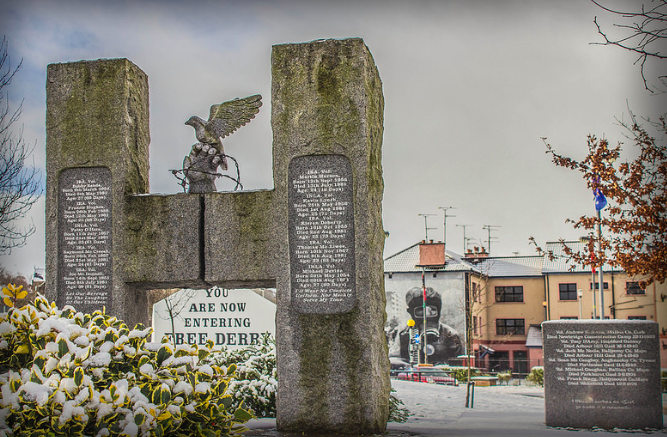
Nobody likes to be humiliated or undermined as a human being. That is what the British authorities tried to do to the Irish republican prisoners in Long Kesh in the 1970s. The British, first under the Labour government and then under Thatcher and the Conservatives, decided to change the status and conditions for the Irish political prisoners. In 1976 they introduced a new regime to treat them like the other prisoners being held for all kinds of criminality. Irish political prisoners throughout the long history of colonial rule by Britain never ever accepted that they were criminals. They regarded themselves and were regarded by their supporters as political prisoners –prisoners of conscience –in jail solely because of what they believed in and because of the political situation obtaining in their own country. They saw themselves as political and would never have seen the inside of a jail except for the diabolical political situation into which they were born and reared. They did not often accept the verdict of the courts which they viewed as corrupt for very often the judges were politically motivated and belonged to one or other secret society. Republicans did not often recognise the court as legitimate and so they could never see themselves as other than political prisoners.
The Irish republican prisoners in the 1970s had a sense of their special place in Irish history. They saw themselves in the tradition of Pearse and Connolly, MacDiarmada and MacDonagh, Clarke and Ceannt, MacSweeney and Ashe and Gaughan and Stagg and before them Fintan Lawlor, Emett and Tone -and the many others who ended up in British jails and who were tortured because they were Irish patriots struggling for freedom and justice. They ended up in prison because they had taken on the might of the British Empire which had taken ownership and control of this small island and persecuted the native inhabitants. Irish citizens became subjects of the English crown and when, due to Irish resistance, they were no longer able to keep control of the whole island of Ireland, they deviously partitioned this small island and held control of the 6 counties in the northeast- with disastrous consequences. The other 26 counties established an independent state which remained reliant on Britain for trade and as an outlet for their male and female unemployed workforce.
As a result of the systematic discrimination by Unionists in the 6 northeastern counties and the systemic and legalised repression by the Unionist government backed by Westminster a rebellion began in 1968 with the Civil Rights Movement. Because of the brutal reaction to that campaign for justice, equality and civil rights, the militant wing of the republican movement reformed to defend the Catholic/nationalist population. The British began to enforce the tactics they had learned in other colonial places and were proposed by Frank Kitson, a big General in the British army with experience of uprisings in other British colonies. These involved counter insurgency methods like employing local assassination squads and agents provocateurs among the loyalist section of the population to undermine the struggle. Thus began a bitter war. Many of those imprisoned by the British in the early 1970s were treated as political prisoners. But in 1976 the British government introduced a new regime in Long Kesh. It was yet another attempt to dehumanise the republican prisoners and undermine the political struggle for freedom and justice. This policy of the British eventually led to the prisoners going on a hunger strike in 1980 and when that was called off they began another hungerstrike led by Bobby Sands on March 1st 1981. It was to be a most distressing episode in our lives for those of us involved in one way or another on the outside but most of all for the prisoners and their families.
(All of the prisoners and their families belonged to the Catholic tradition, even if some were not practicing Catholics. They had been educated in Catholic schools and belonged to Catholic parishes and dioceses. Except for the efforts of Cardinal Tomas O Fiaich and one or two bishops, the other Church leaders were hostile to the republican movement. They kept silent about the brutal treatment of prisoners over many years. They had little to say about the role of the British government in fomenting violence though they had plenty to say about ‘men of violence’ referring to republicans. It is little wonder then that most of the republican community in the north has disconnected with the Catholic church. The Long Kesh prison chaplain, Fr John Murphy, remained friendly with the prisoners, as we can see from the Diary kept by Bobby Sands. Another visiting chaplain became more and more hostile to the prisoners and their political leaders. His attitude surprised and angered many because he had allowed his political beliefs to influence his attitude to the prisoners and to the leaders of Sinn Fen. He constantly denounced them and he went on to pressurise the families to intervene and to end the hungerstrike. It was called off on 3 October 1981. Nothing would ever be the same again.)
If they hadnt committed crimes they wouldnt be in jail its always rich to talk about the rights of criminals but no mention of the rights of the people they killed and maimed strange that…
They’re are better ways to be a patriot and better patriots than the hunger strikers who were the victims of their own choices.
“Nobody likes to be humiliated or undermined as a human being. That is what the British authorities tried to do to the Irish republican prisoners in Long Kesh in the 1970s. The British, first under the Labour government and then under Thatcher and the Conservatives, decided to change the status and conditions for the Irish political prisoners. In 1976 they introduced a new regime to treat them like the other prisoners being held for all kinds of criminality.”
They weren’t political.prisoners. They were convicted criminals. Hence it was important not to afford them any special status. If you commit a crime you should be treated the same as the next criminal. One’s motivation for a crime shouldn’t mean one gets privileged treatment.
“Irish political prisoners throughout the long history of colonial rule by Britain never ever accepted that they were criminals.”
Prisons across the world are full of people who don’t think they are criminals. Doesn’t mean they’re not. If you commit a crime and are convicted I’m afraid that makes you a criminal.
“They regarded themselves and were regarded by their supporters as political prisoners –prisoners of conscience –in jail solely because of what they believed in and because of the political situation obtaining in their own country.”
Except patently they weren’t in gaol solely because of what they believed in. They were in gaol because of what they did, ie commiited serious crimes.
“They saw themselves as political and would never have seen the inside of a jail except for the diabolical political situation into which they were born and reared.”
They would never have seen the inside of a gaol if they hadn’t committed a serious crime.
“They did not often accept the verdict of the courts which they viewed as corrupt for very often the judges were politically motivated and belonged to one or other secret society.”
What evidence do you have for this claim?
“As a result of the systematic discrimination by Unionists in the 6 northeastern counties and the systemic and legalised repression by the Unionist government backed by Westminster a rebellion began in 1968 with the Civil Rights Movement.”
What ‘systematic and legalised repression’ was backed by Westminster in 1968?
The civil rights movement wasn’t a rebellion.
“It was yet another attempt to dehumanise the republican prisoners and undermine the political struggle for freedom and justice.”
Treating all.criminals.the same isn’t dehumanising. Smearing your sell in your own shit was dehumanising.
” It was to be a most distressing episode in our lives for those of us involved in one way or another on the outside but most of all for the prisoners and their families.”
They’ve only themselves to blame for the distress they inflicted on their families. Shame on them.
“Except for the efforts of Cardinal Tomas O Fiaich and one or two bishops, the other Church leaders were hostile to the republican movement.”
As Christians of course they were hostile to murderers and terrorists.
“Another visiting chaplain became more and more hostile to the prisoners and their political leaders. His attitude surprised and angered many because he had allowed his political beliefs to influence his attitude to the prisoners and to the leaders of Sinn Fen. He constantly denounced them and he went on to pressurise the families to intervene and to end the hungerstrike.”
You’re referring to Denis Faul and it was his Christian not political beliefs that rightly led him to oppose terror.
Fr Mc Veigh
As MT above has correctly deduced,you are referring to Monsignor Denis Faul but for some reason were reluctant to name him.As an uncritical supporter of Sinn Fein,you apparently are quite happy to traduce the memory of a priest who did not spare the British authorities or the Repulican movement if he felt they needed criticising.Of course in the early 70s when he(along with Frs Murray and Brady)documented the abuses of internment and other wrongs,he was counted a fine person,but when he dared to question the bona fides of Sinn Fein regarding the Hunger Strikes his motives were immediately attacked.
Not sure that line of argument stands up, Argenta. There are people who can talk perfect sense on one topic and have an addle-brained conception of another. So the fact that Monsignor Faul was hailed for his work in one area and criticised for his work in another seems to me reasonable. The key questions would be, was it right to laud him on Point A and was it right to condemn him on Point B.
Andwho was criticising him?Sinn Fein and their followers!Hardly objective critics!!
“As MT above has correctly deduced,you are referring to Monsignor Denis Faul but for some reason were reluctant to name him.As an uncritical supporter of Sinn Fein,you apparently are quite happy to traduce the memory of a priest who did not spare the British authorities or the Repulican movement if he felt they needed criticising.Of course in the early 70s when he(along with Frs Murray and Brady)documented the abuses of internment and other wrongs,he was counted a fine person,but when he dared to question the bona fides of Sinn Fein regarding the Hunger Strikes his motives were immediately attacked.”
Mgr Faul waa a brave man of the utmost integrity who wasn’t afraid to speak truth to power and didn’t discriminate in challenging wrongdoing, whether by the state or the terror gangs.
Once again we have Jude’s pro-life blog portraying further positive images of how 10 republicans took part in a death cult regime of self-harm and suicide.
More positive images being recalled and positively painted of so called republican “icons” and “heros” who as part of a death cult, inflicting self-harm and suicide. They carried out their self-harm and suicide in a slow calculated and controlled manner. Now years after their deaths they are being used as propaganda tools to influence, control and condition the thinking of another generation of republican youth. A republican youth who have never experienced the conflict never mind the events of 1981.
We have the disturbing and distasteful sight of these men’s photos being carried by children on the streets in republican parades. Thirty five years later these men are still being used to hunt the republican youth of today. A republican youth that will gorge on their accounts of self-harm and suicide to further a political agenda.
In a society that is so politically correct and who warns it youth on the dangers of misusing drugs and alcohol, on speeding and advised those it thinks are contemplating self-harm or suicide to seek help via government programs. We now have a party in government that finds it acceptable to promote of self-harm and suicide of 10 men as politically acceptable.
It’s a perversion and every right thinking person should find it repugnant that Sinn Fein/IRA continue to use these men for their political ends. Further inflicting the past with images of self-harm and suicide on the young of today.